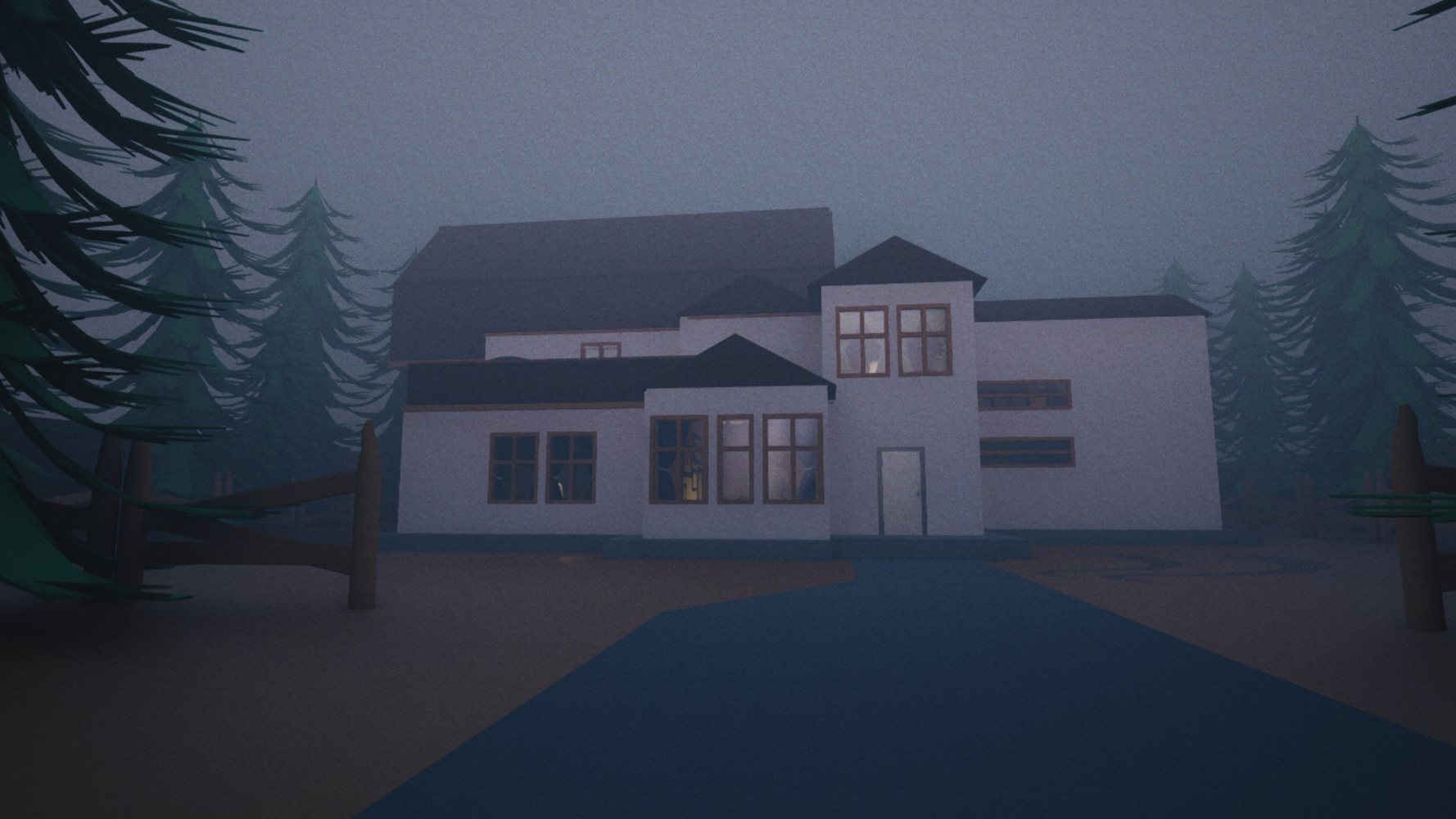
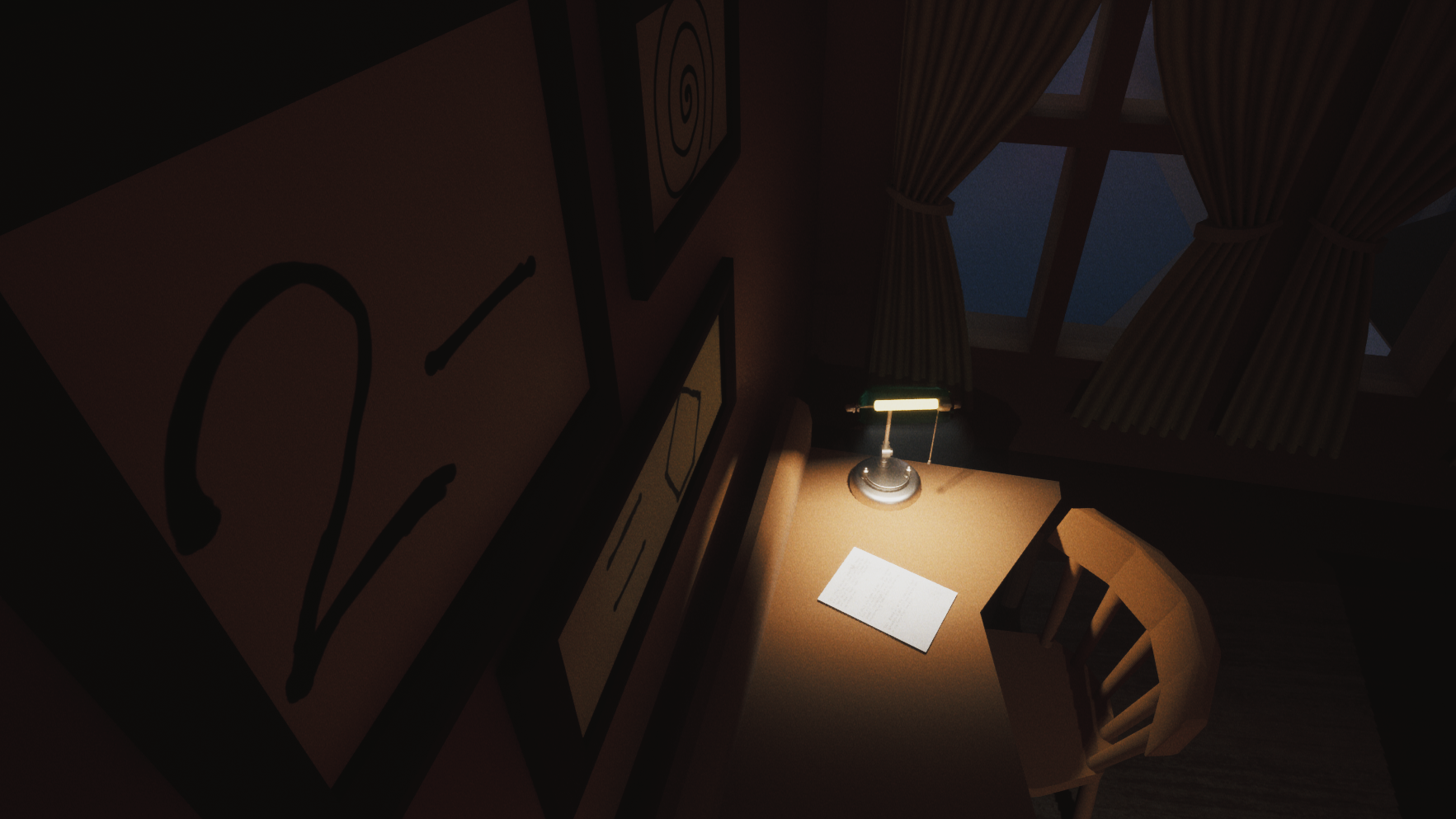
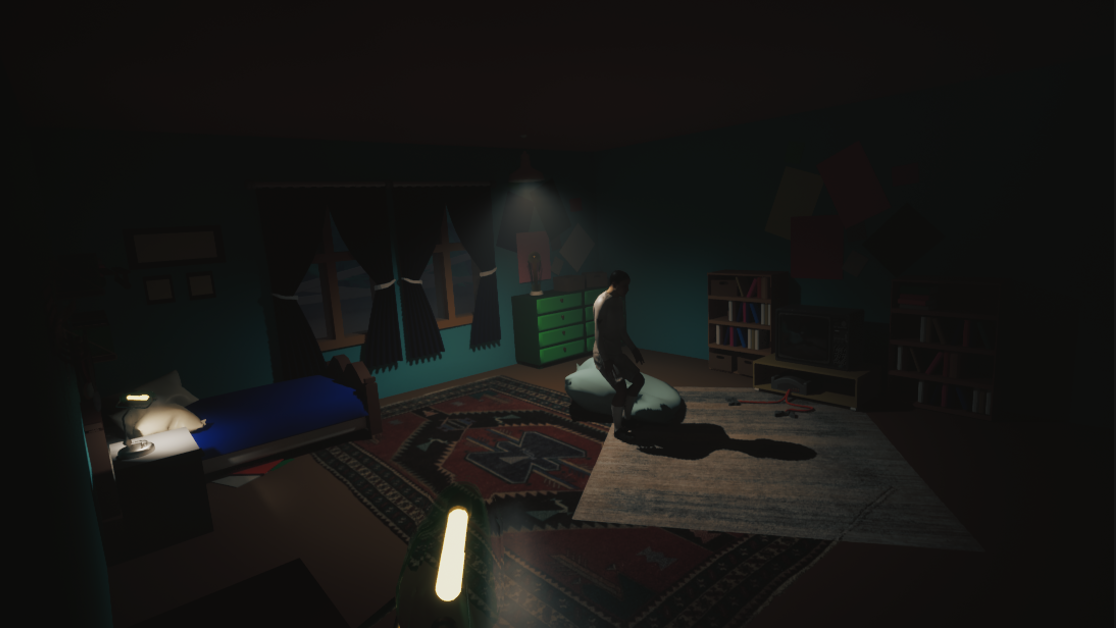
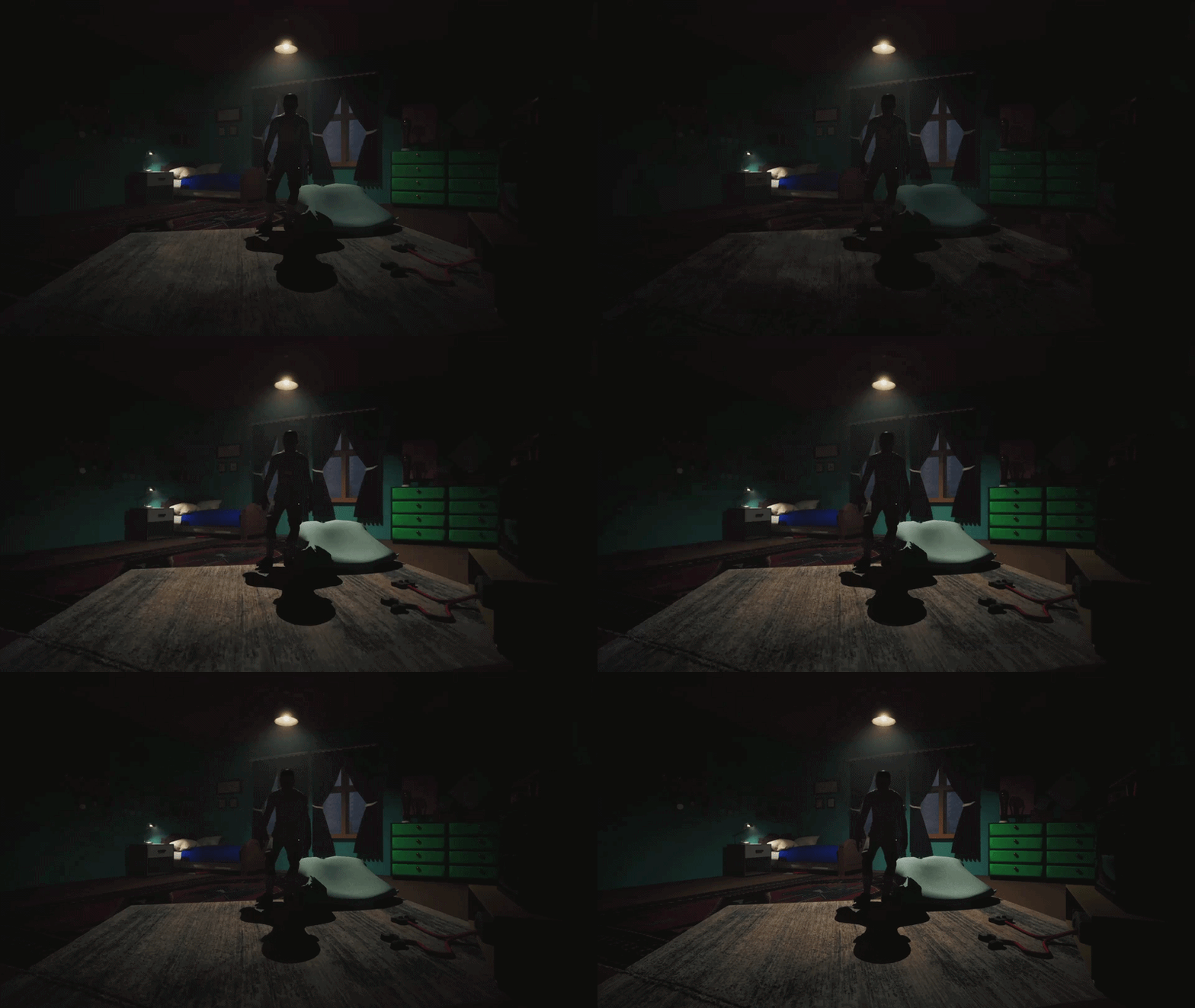
“You find yourself in your childhood home, long abandoned and forgotten. You never wanted to come back here again. But somehow, you can’t entirely remember why. Explore the house, solve the ciphers written on the walls, and uncover the ghosts you once knew.”
Project Details
Made over 5 weeks, half time (4h/day)
Unreal Engine 5.3
Plugins used:
Horror Engine 3.1
Blockout Tools
Summary
A narrative-driven puzzle experience focused on atmospheric set design and a varied mix of puzzle types.
The Goal
To make a fully realised horror/puzzle experience from start to finish. I wanted to create a unique experience that could emulate games like Silent Hill 2 or Amnesia.
Project Goals
Integrated Puzzle Design
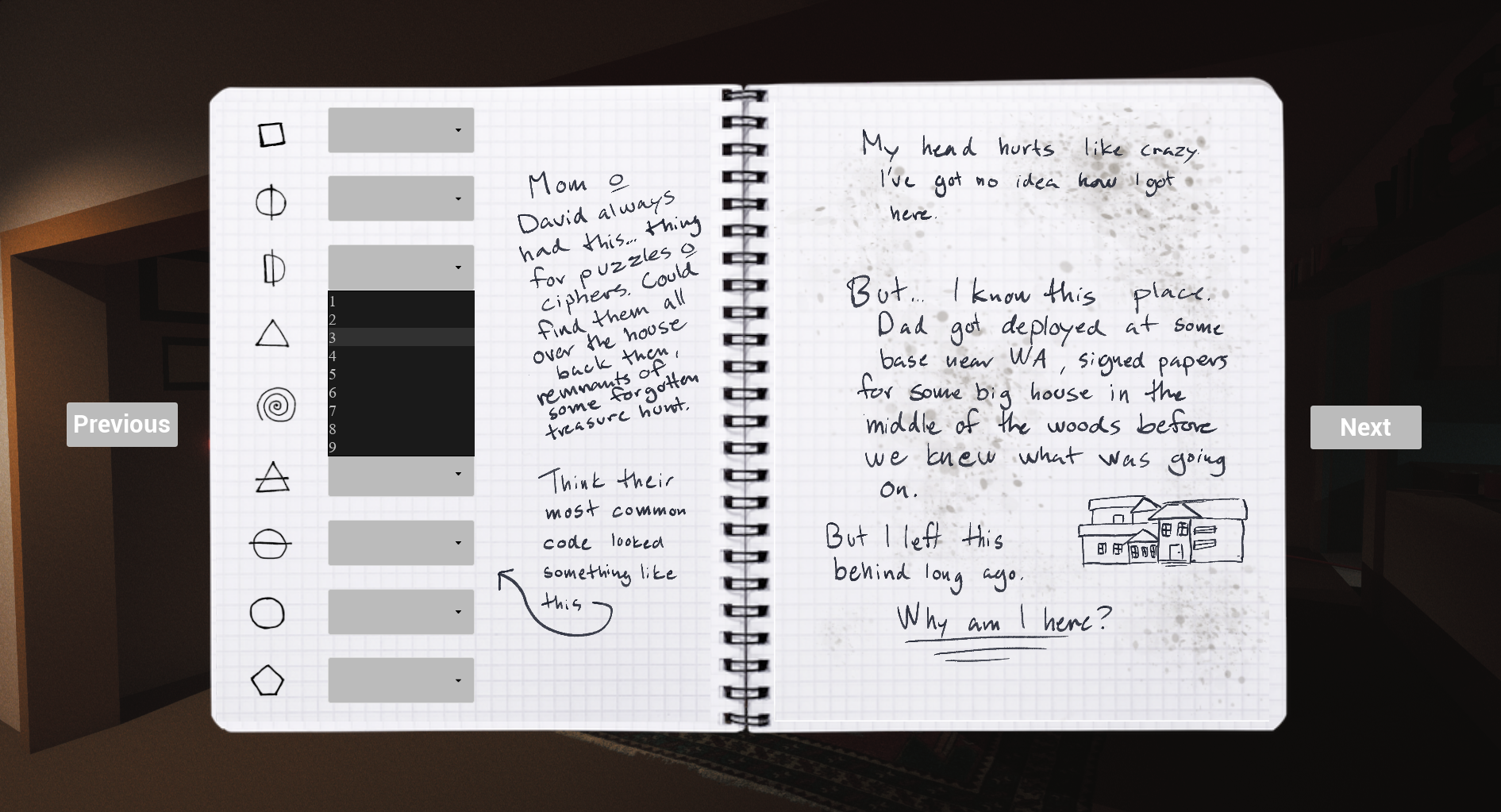
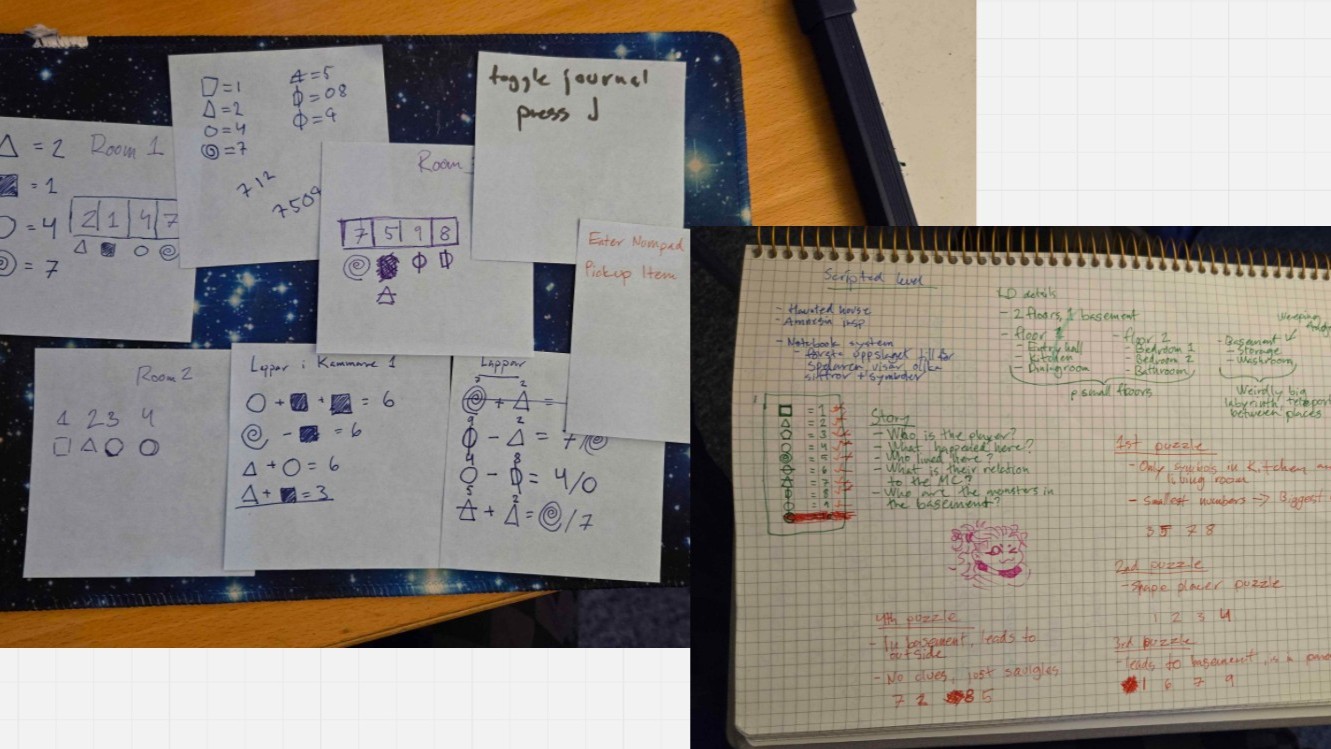
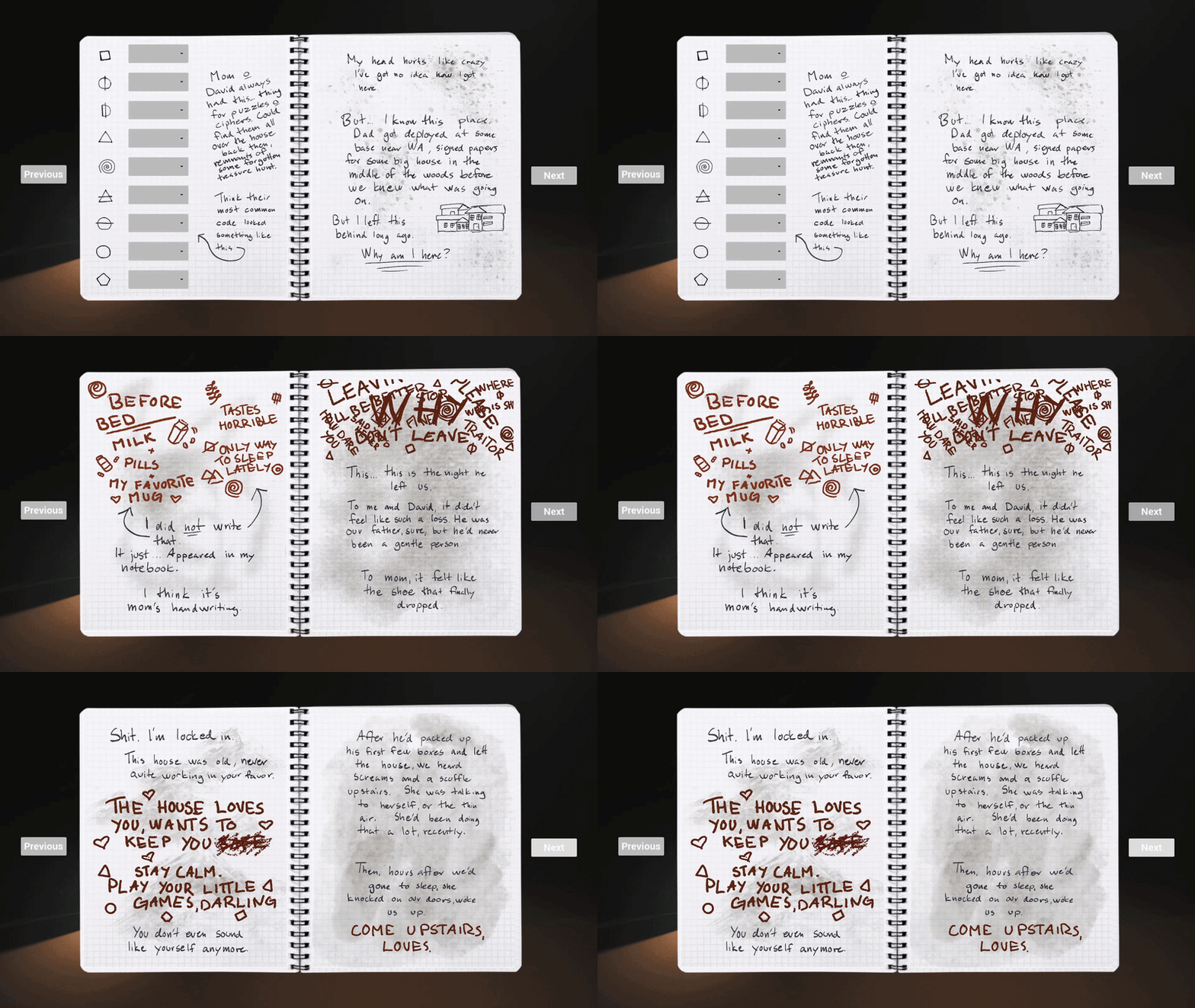
Inspired by the concept of pen-and-paper puzzle games, the act of writing down your suspicions of various clues has been ingrained into the gameplay itself through a custom made journal script system.
An engaging mystery
From the beginning, I wanted to make a level where all the details mattered for the story and the mystery to work. A good mystery tells itself slowly, through environmental storytelling, through second-hand retellings, through unreliable narrators.
Immersive set design
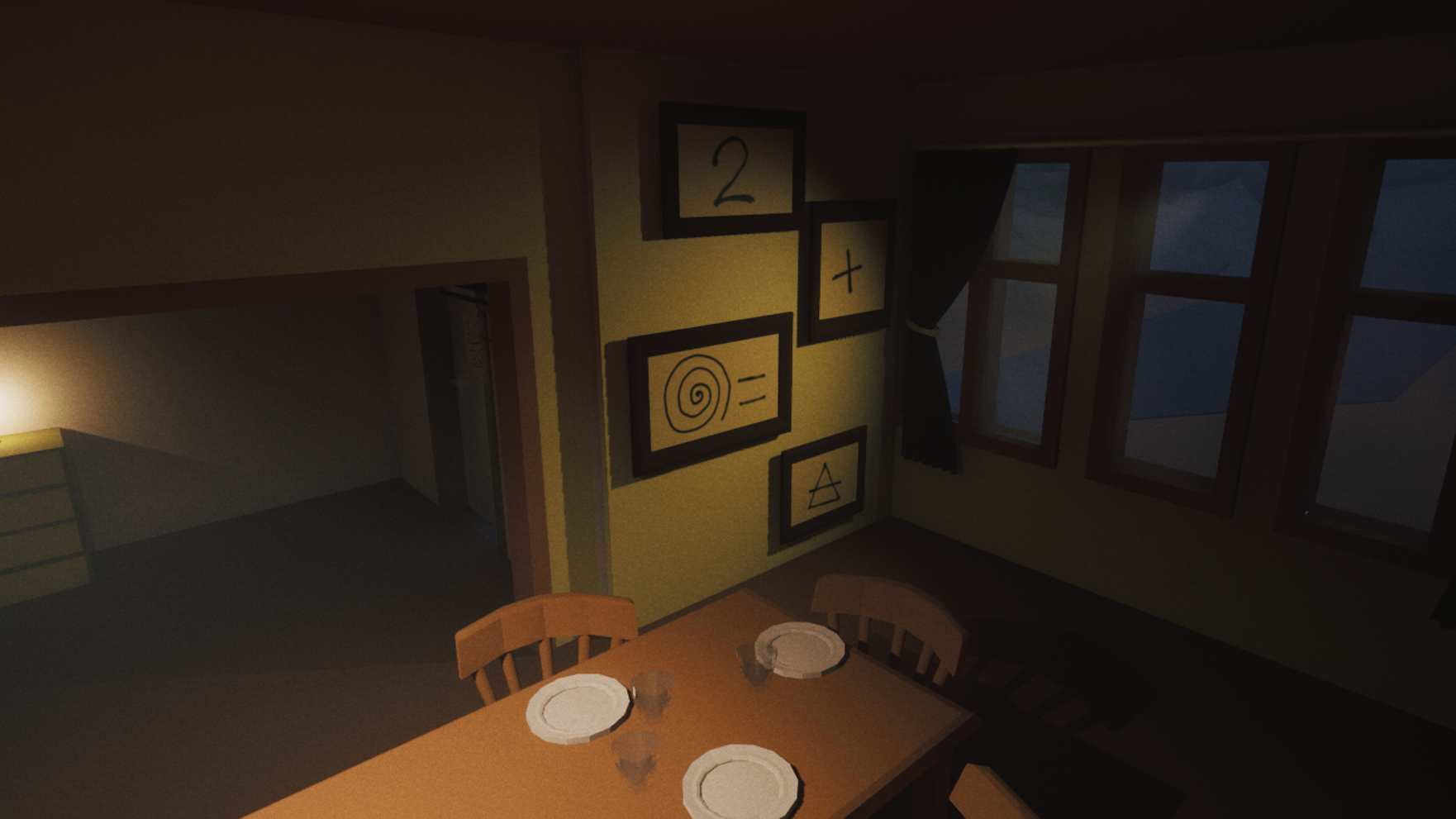
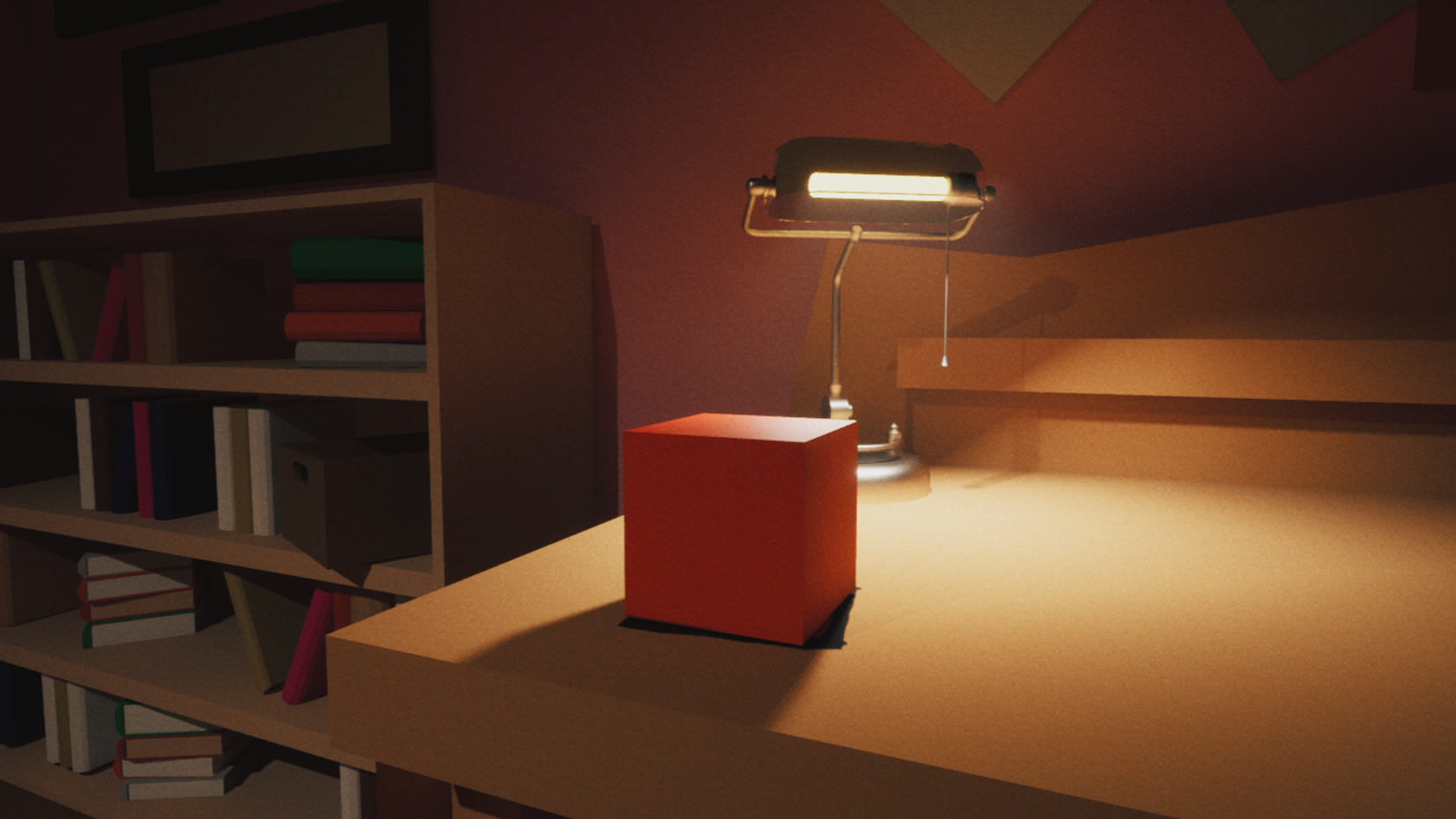
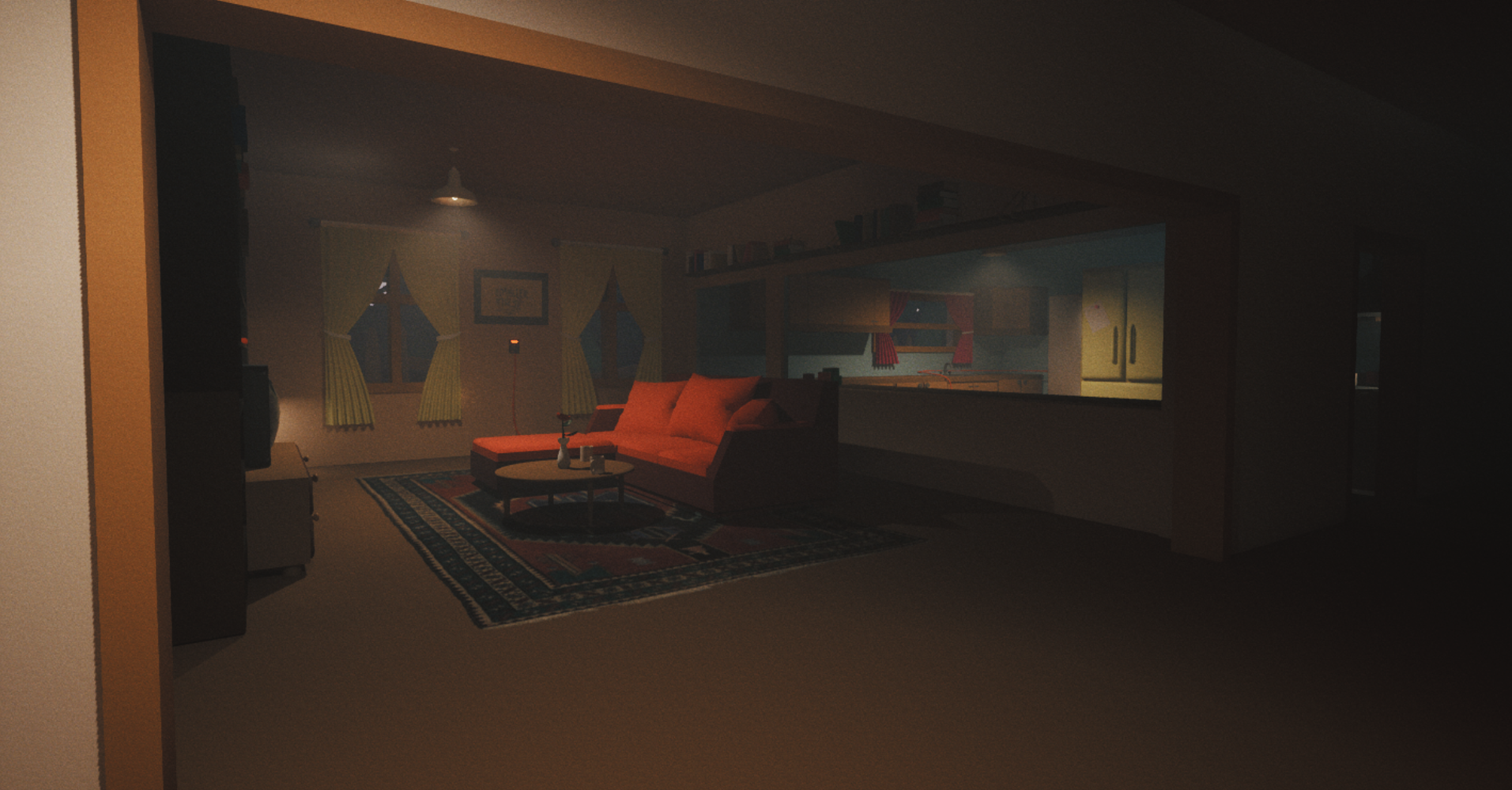
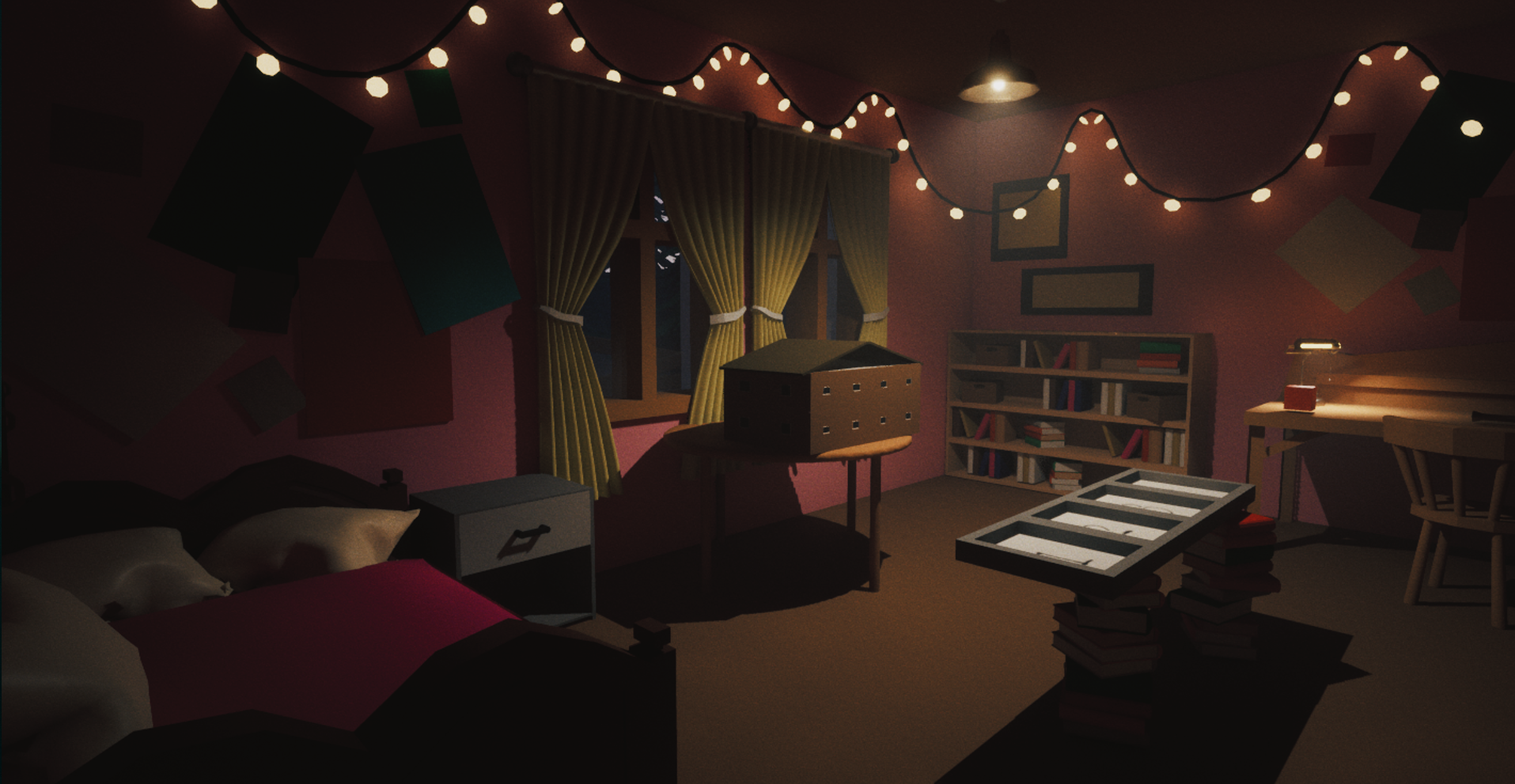
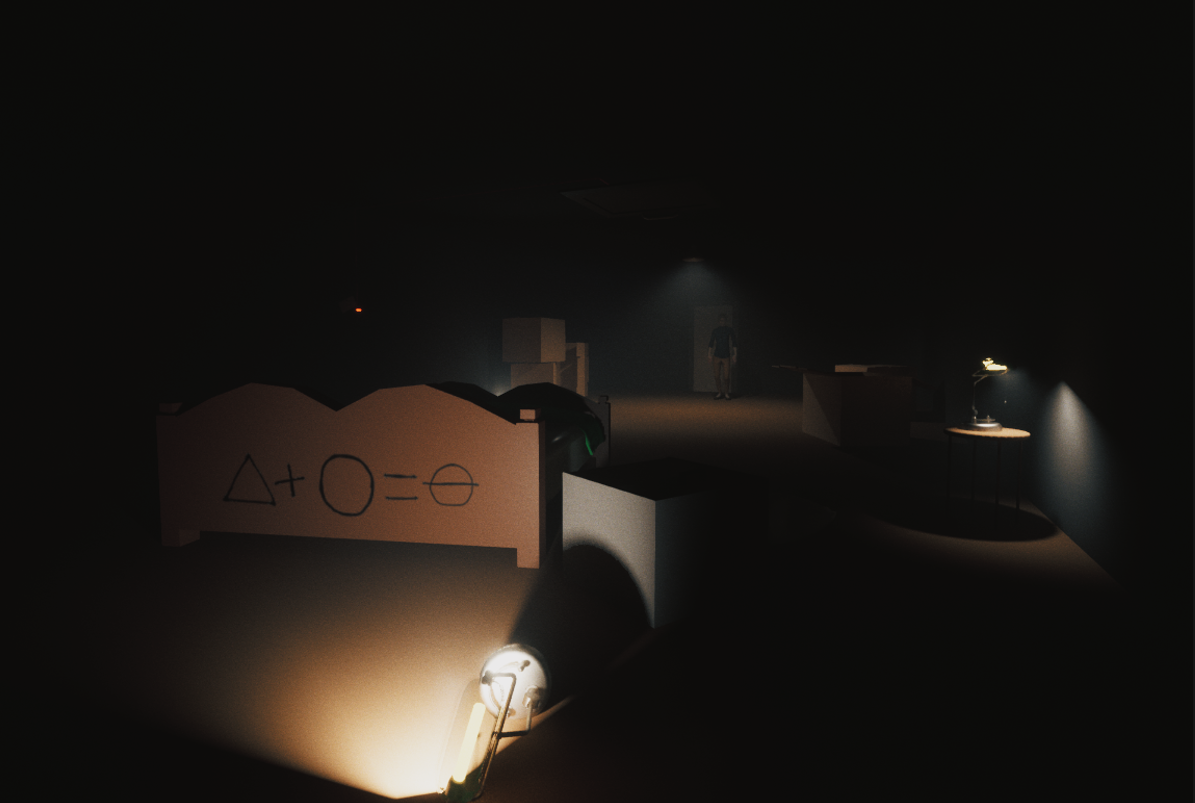
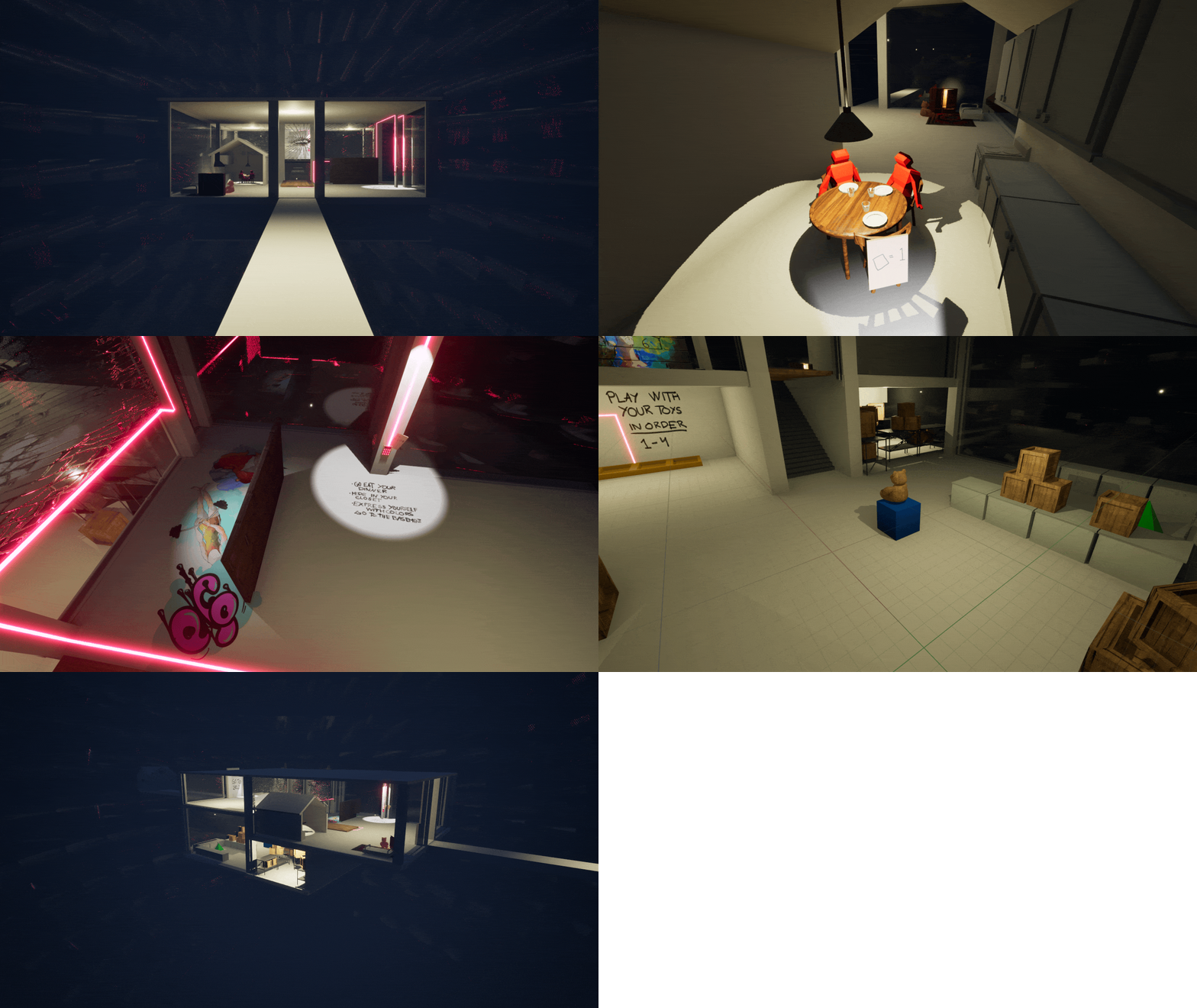
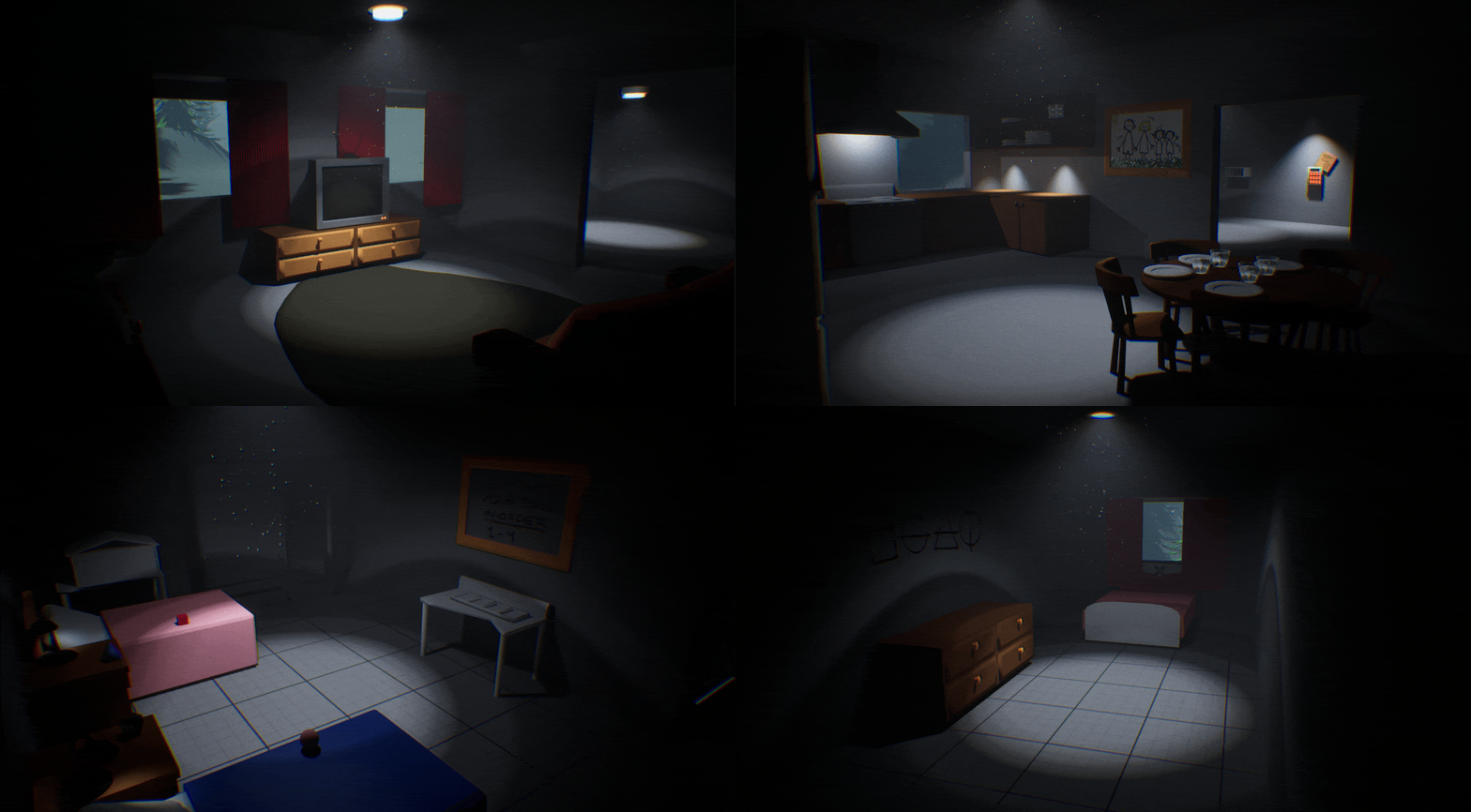
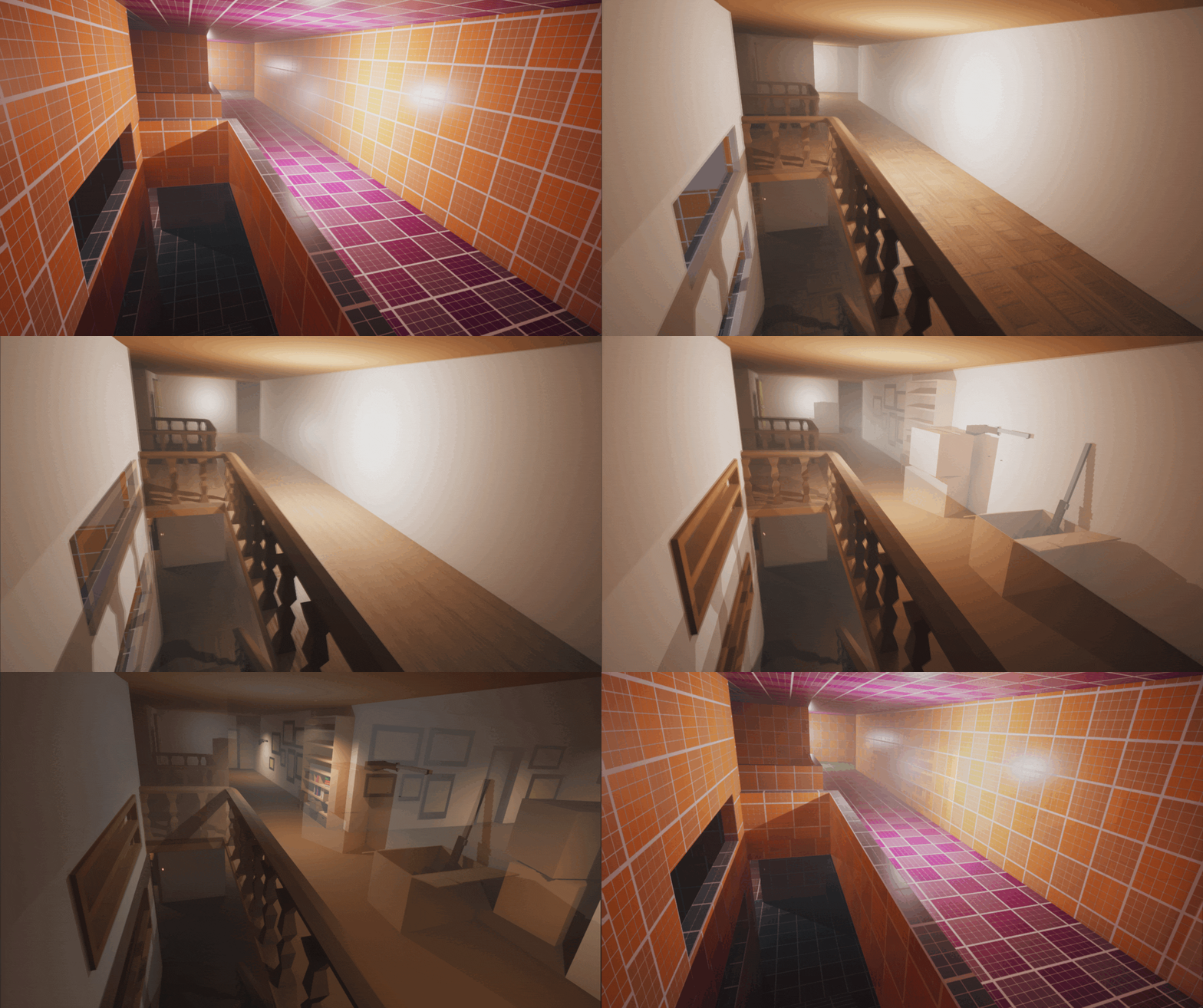
Half-filled moving boxes, magazines poorly hidden under a bed, a teddy bear you’re too old to still have in your bed sits beside it. The house is made to feel lived in, showing signs of a once happy family inhabiting it.
Level Walkthrough
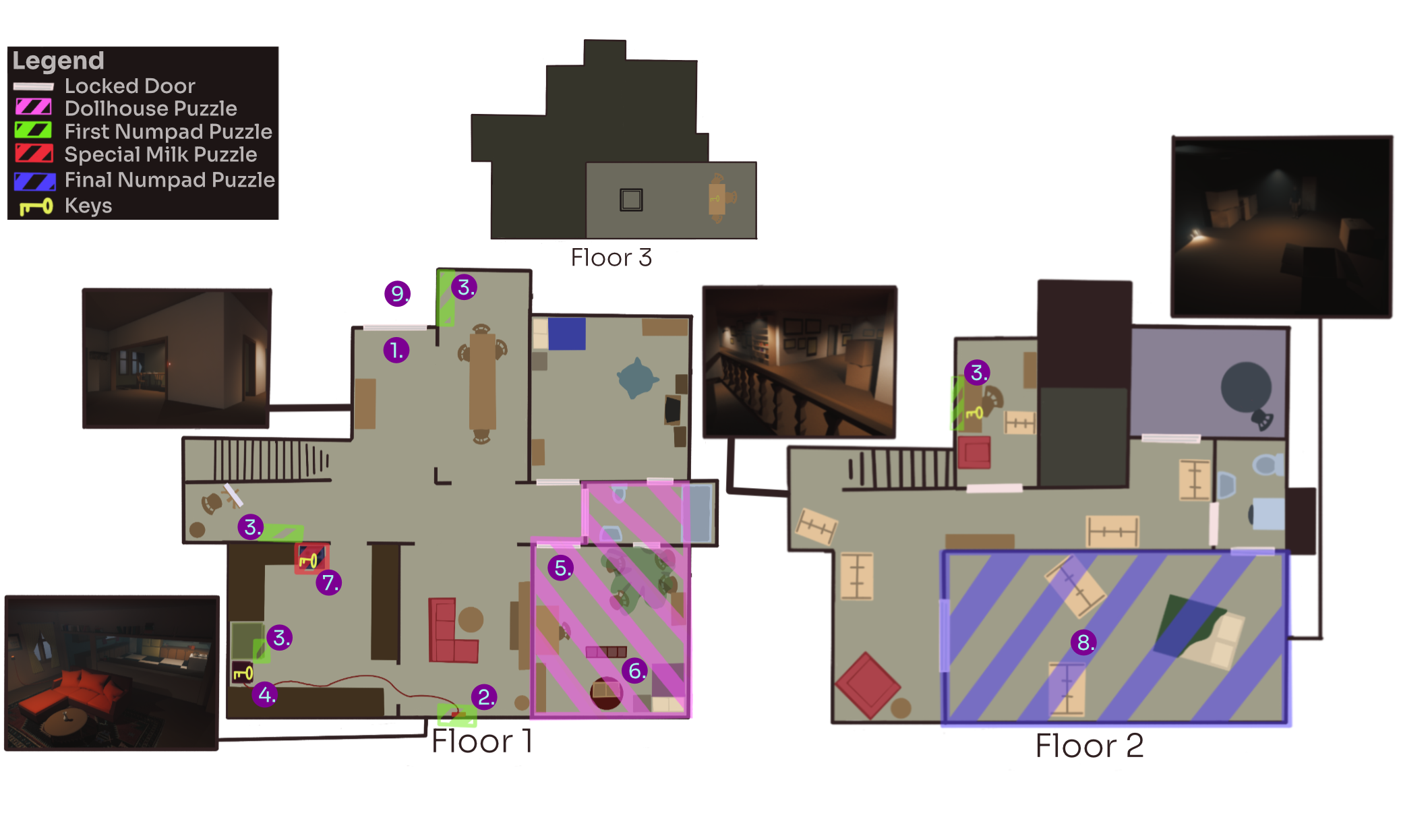
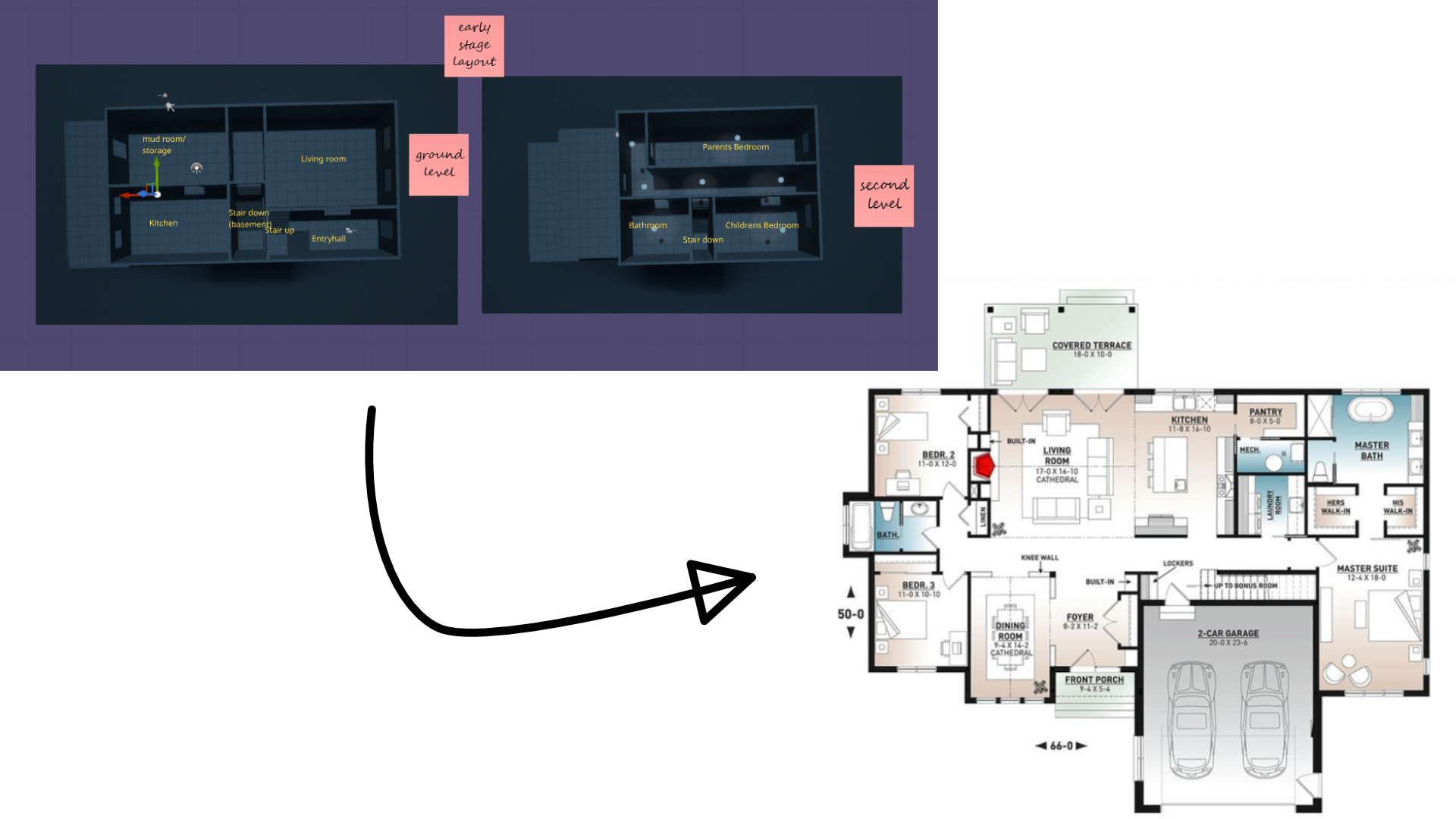
Topdowns
Puzzle Design Breakdowns
First Numpad Puzzle
Journal
Living Room
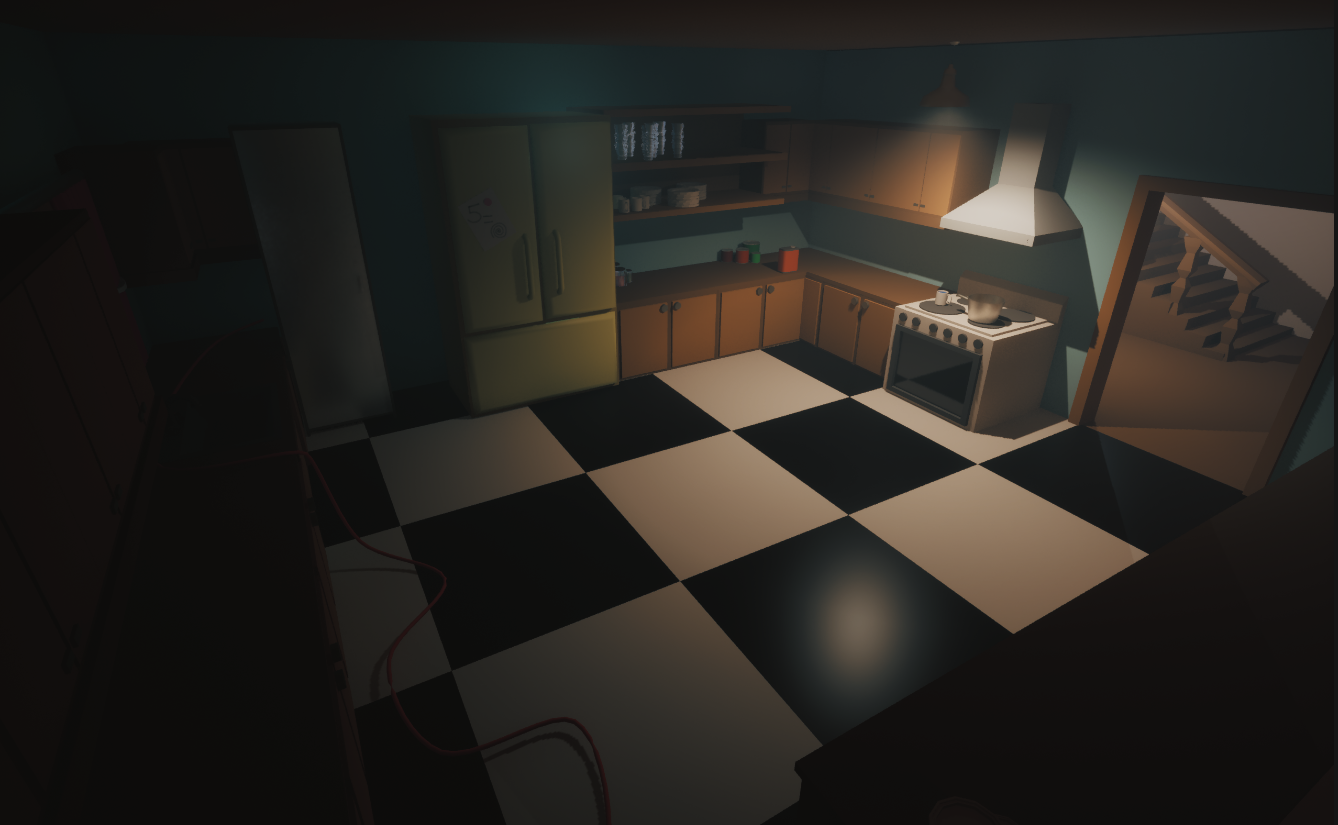
Kitchen
Entering the story
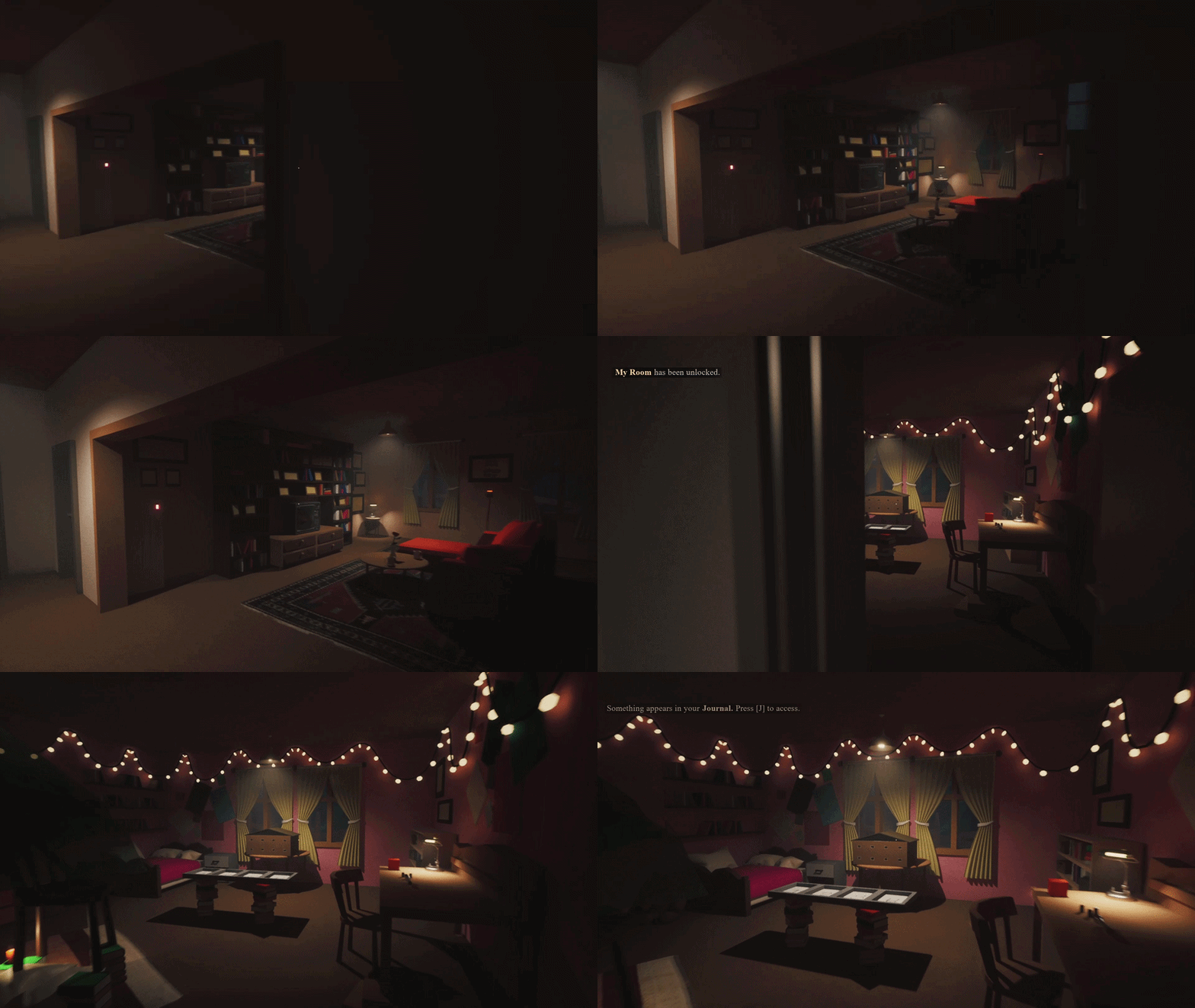
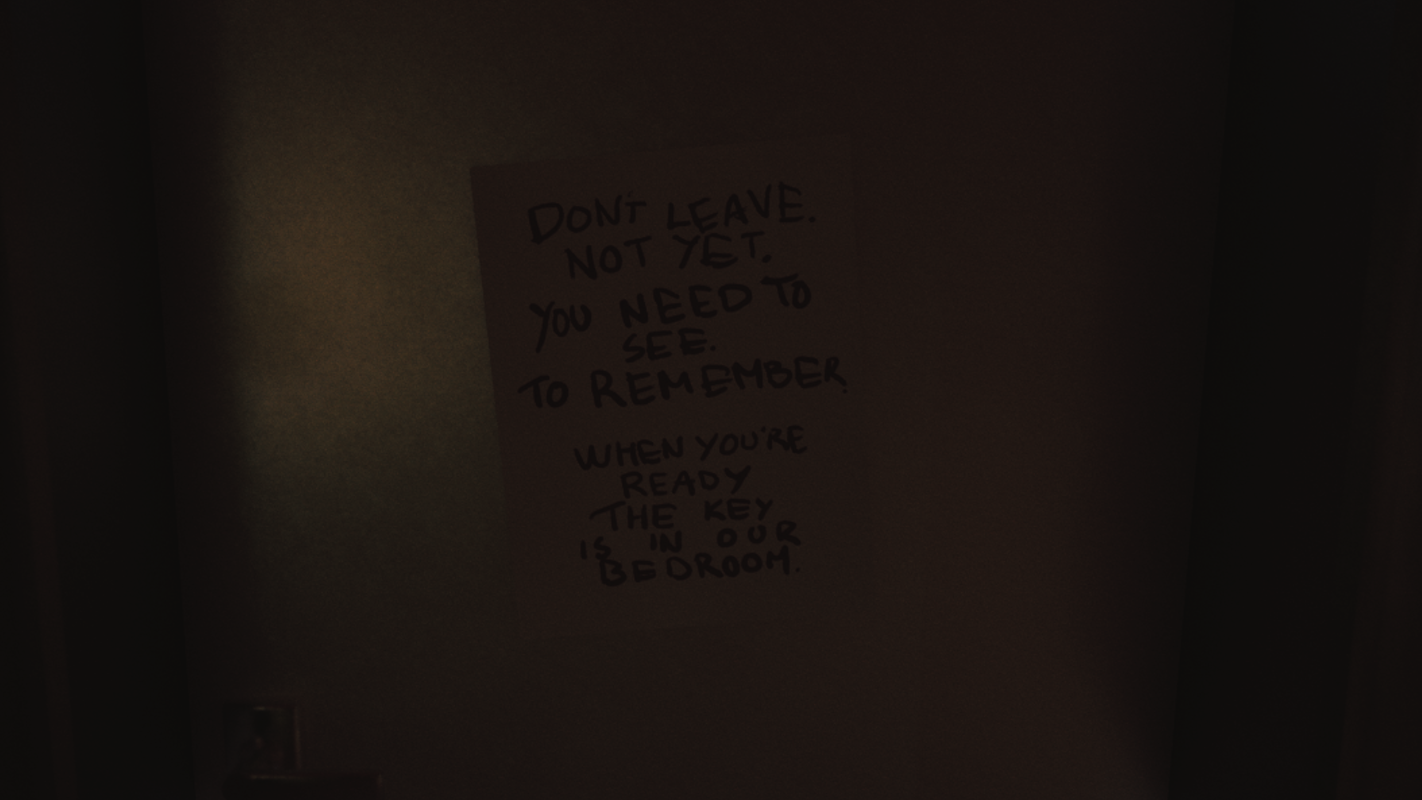
At the start of this level, the Player character awakes with a gasp. In front of them, a locked door with a note. The goal – to get to the master bedroom to get the key to leave – is presented right out of the gate.
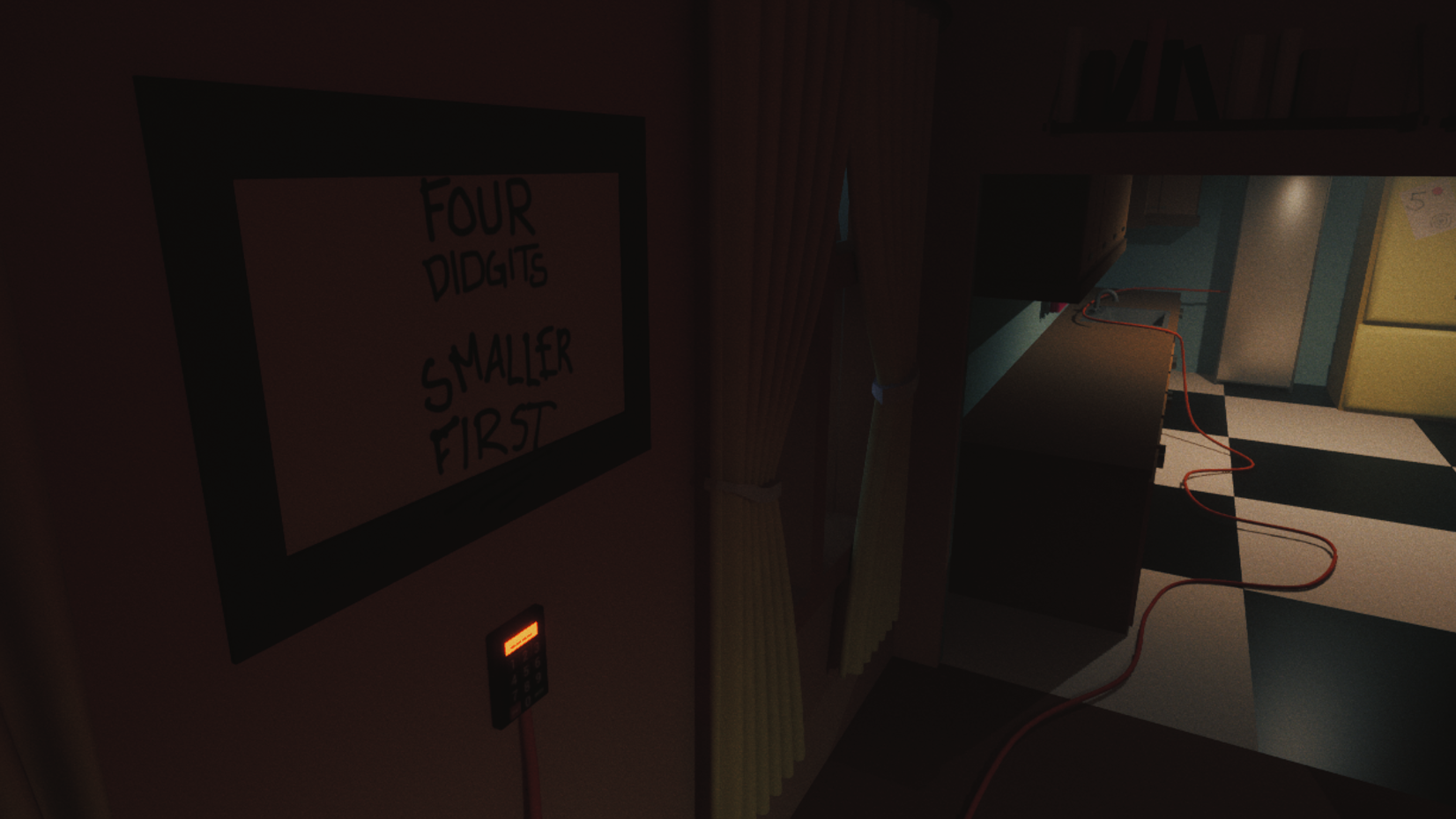
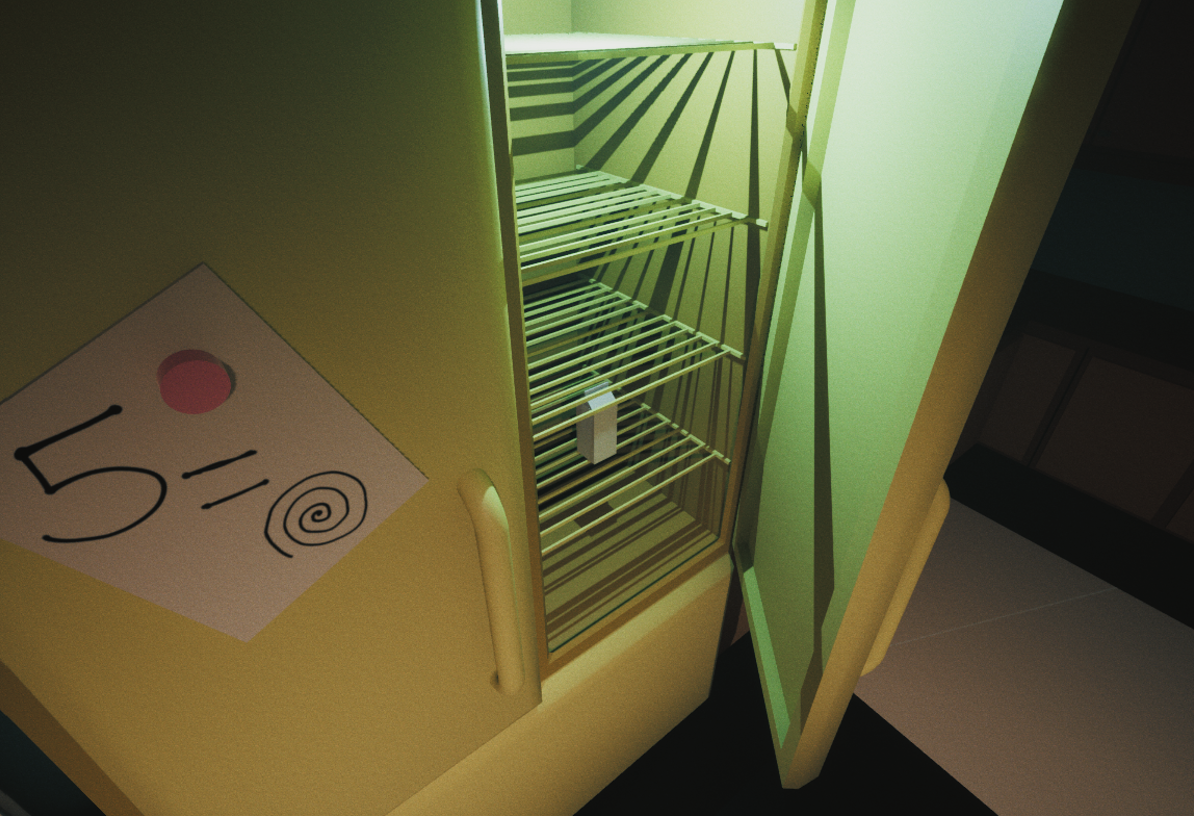
After this, the next puzzle is introduced – a numpad with the above text, “FOUR DIGITS, SMALLER FIRST”. Throughout the house, they will find four cluesleading to the discovery of four numbers. Writing them out in order of smallest to largest number reveals the password.
This puzzle is placed this early to give the player anincentive to start exploring the house – giving them a natural way to quickly get immersed by wanting to see every nook and cranny of the house.
Overlapping puzzles
This first puzzle can easily be played to make up about half of the level’s playtime – but not because of it’s complexity. As it is with many other escape-room-esque games (Silent Hill 2 etc.), you often get clues and keys to puzzles you don’t know the end goal to yet.
This is a deliberate choice, where I wanted the player to feel less forced in specific directions, and more rewarded for “stumbling upon” something not yet entirely relevant.
Shape Puzzle
Son's bedroom
Daughter's bedroom
Bathroom
A confined space
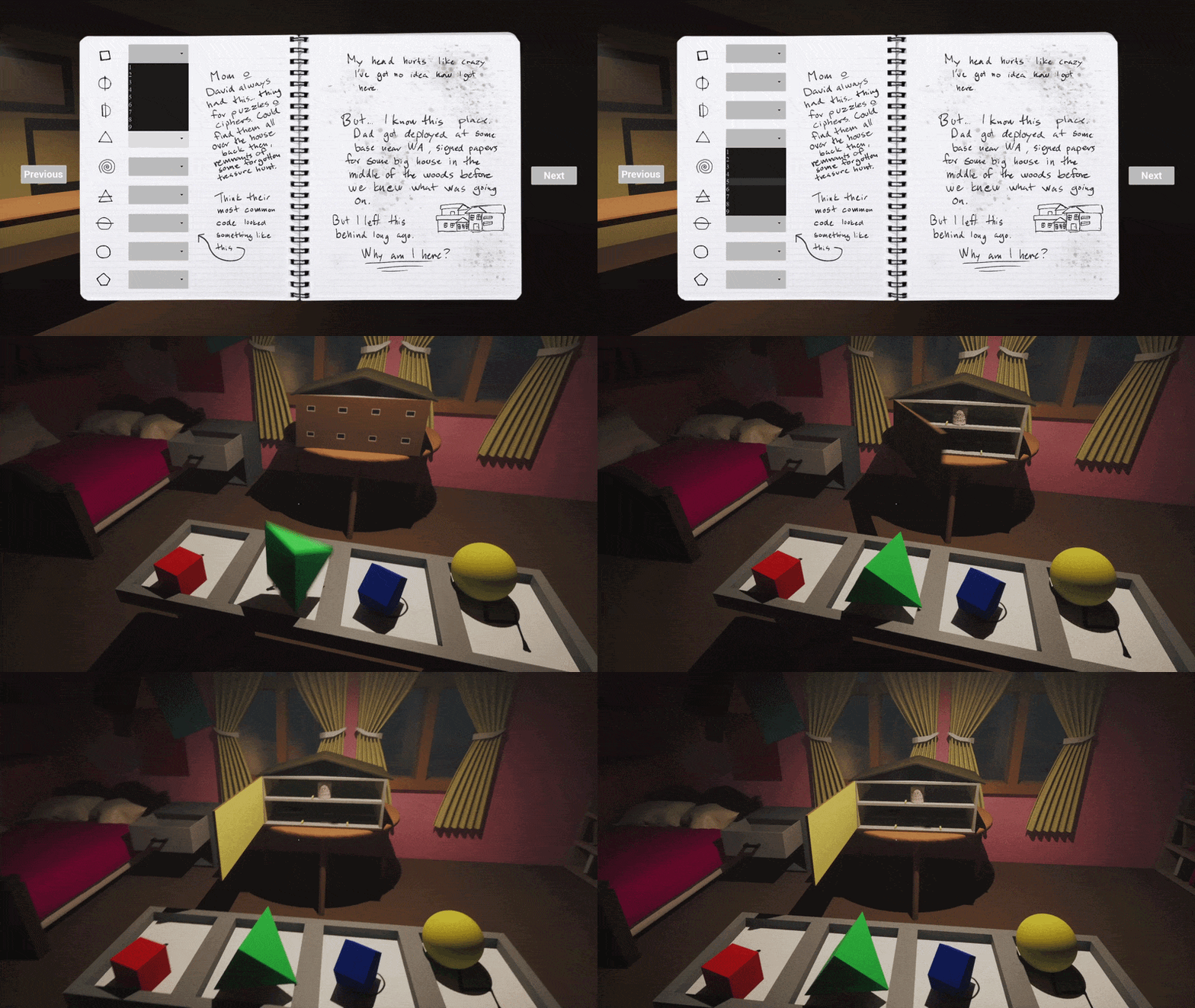
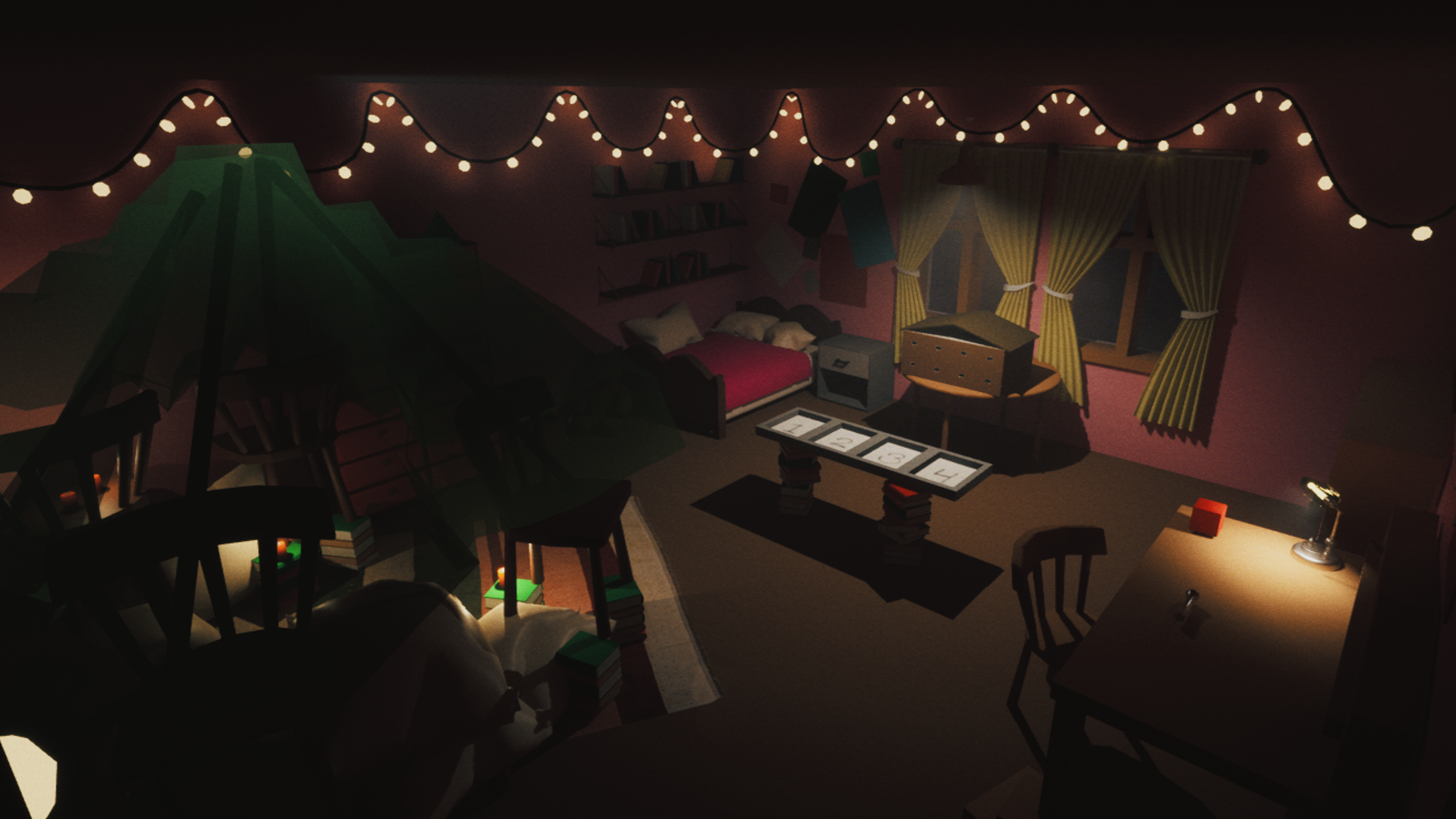
Once you have used the key from the first puzzle and entered the Daughter’s Bedroom, you are immediately locked in. Your journal updates, the ghost of your mother’s crude handwriting telling you toplay with your toys.
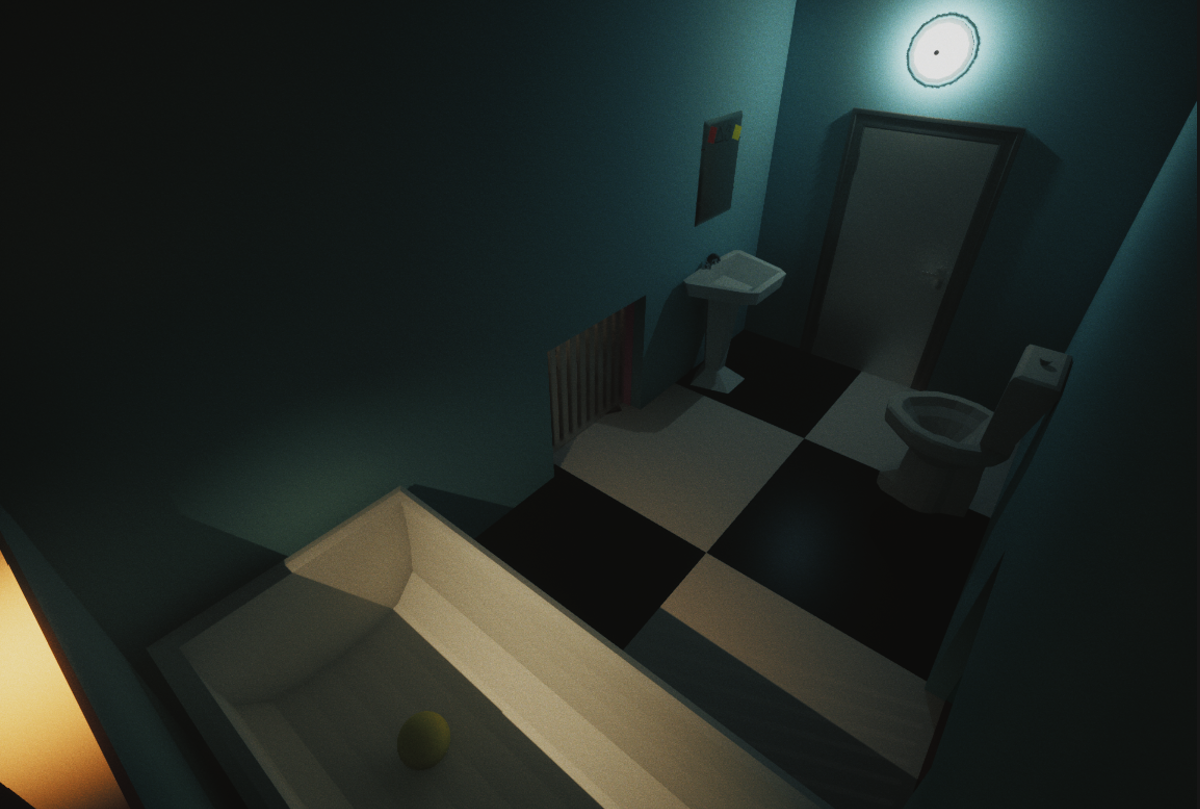
An old children’s puzzle requires you toplace different geometric shapes that can be found here – and in the adjacent bathroom – in order. Several hints around the room indicates that the 3D shapes correspond to the ones in your journal.
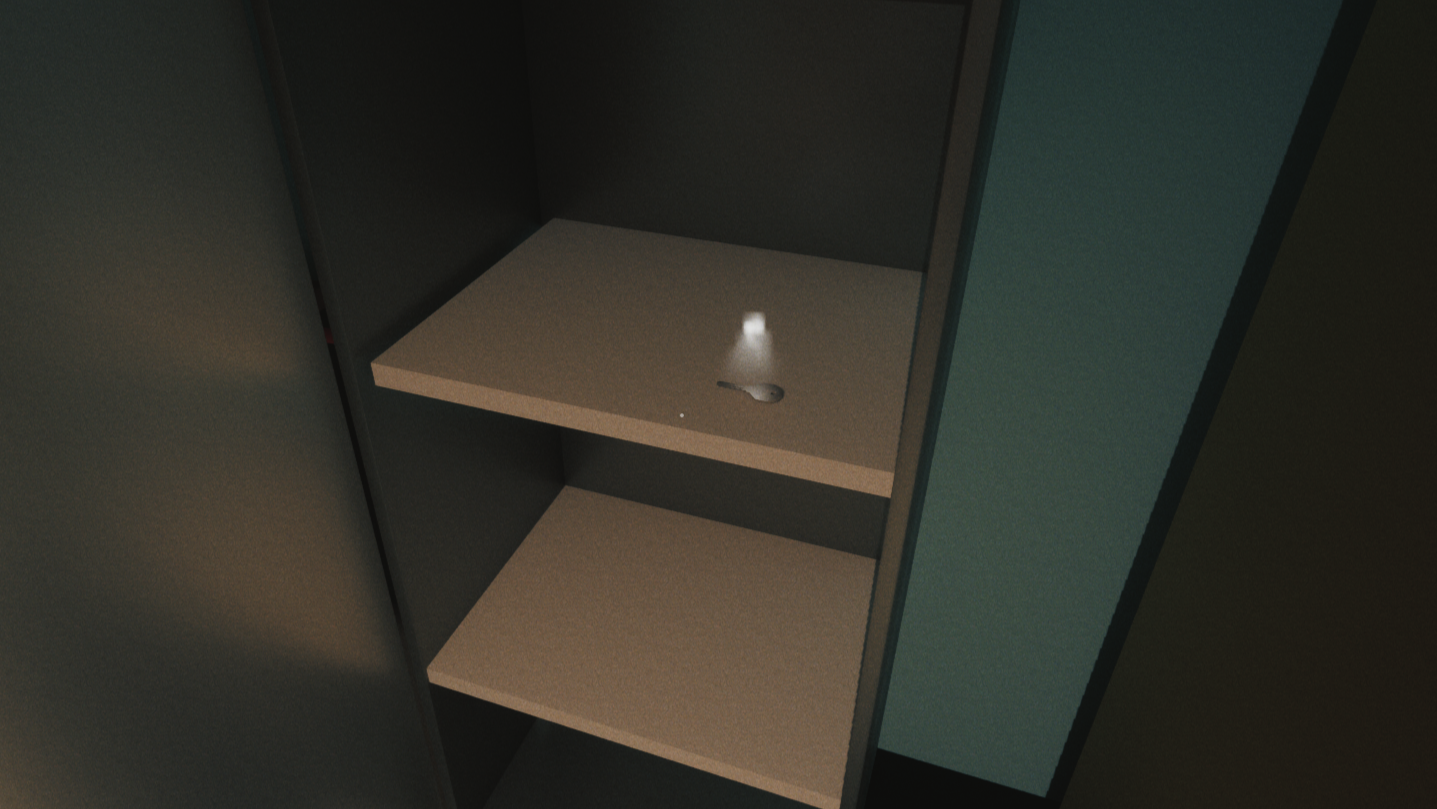
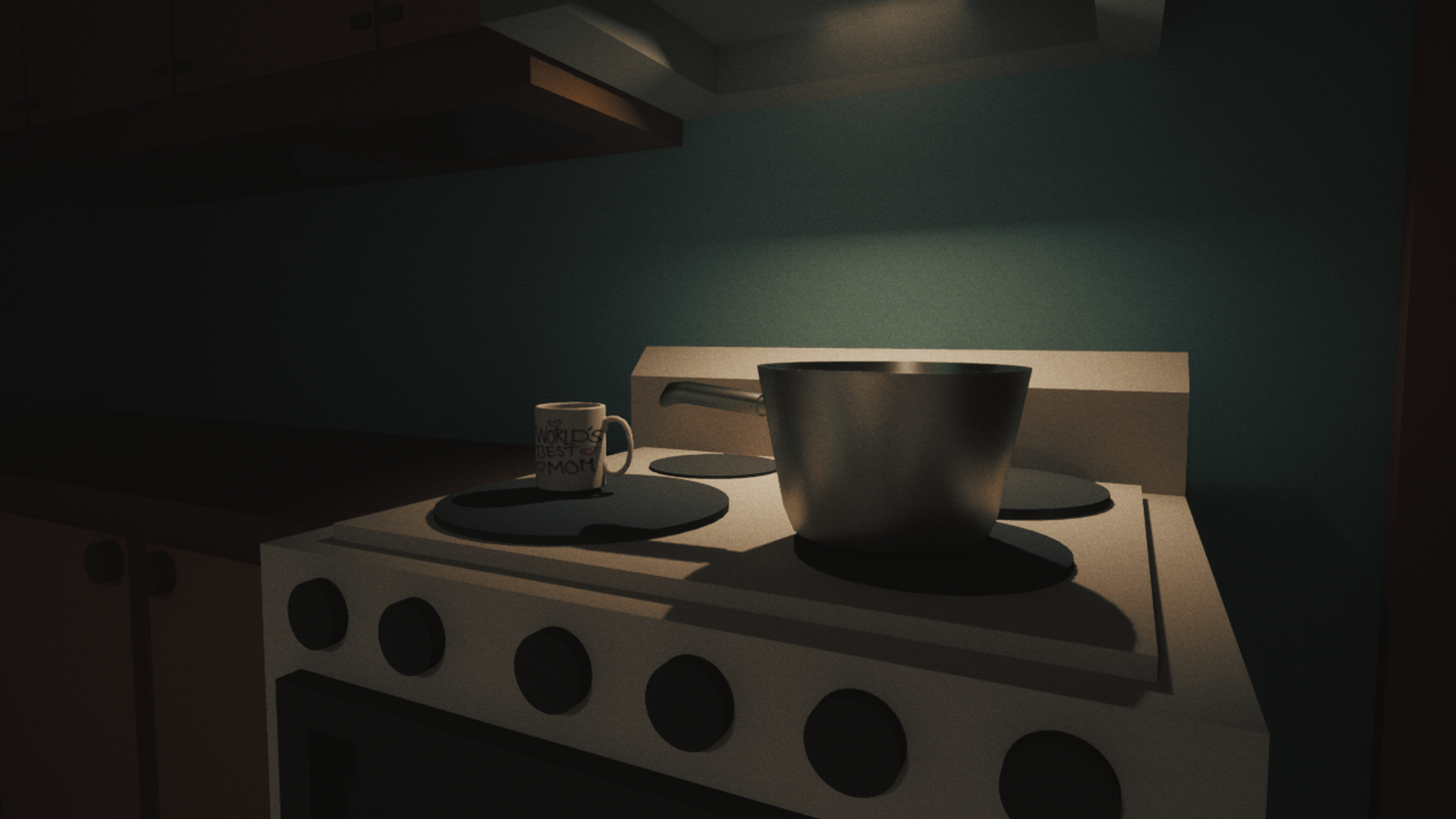
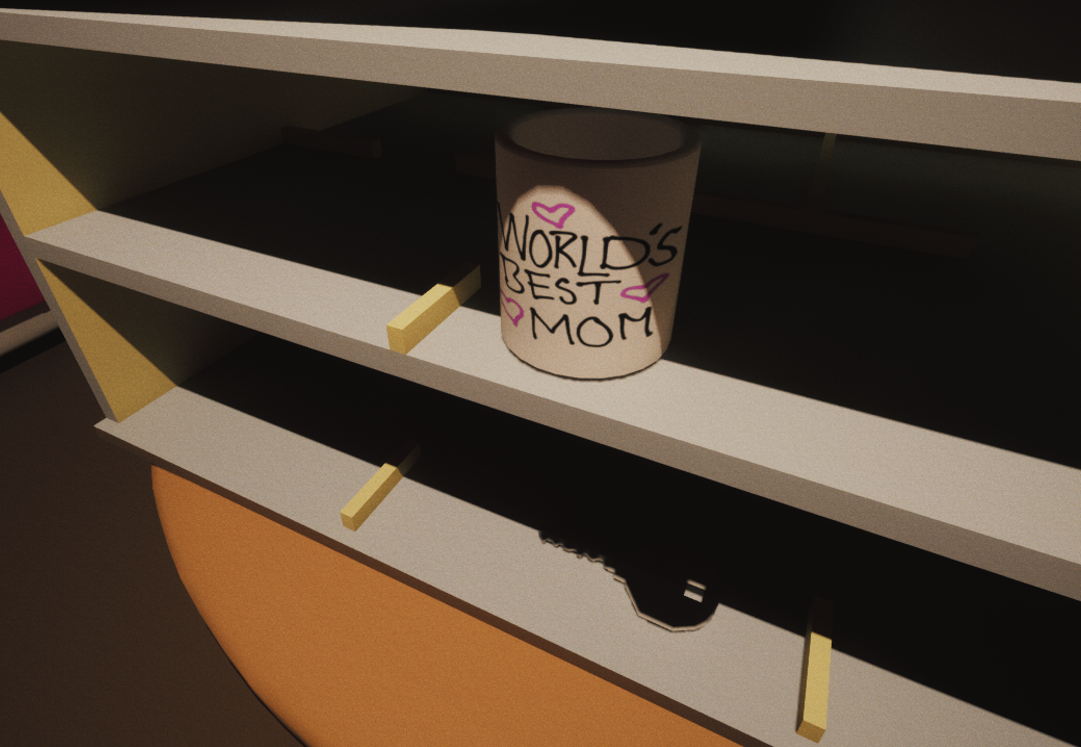
When the puzzle is solved, a dollhouse opens upto reveal a key (leading to the other grate in the bathroom) and a mug with the words “World’s best mom” written on it. On your way back to the kitchen, an apparition appears in your late brother’s bedroom…
Tension, Release, then Tension again
When playtesters played through this level, I was happy to see just how well the jumpscare worked. The closed off space of the bedroom made testers very active in their search for details.
This meant that when they had solved the puzzle and figured out a way to get out of there (with the mug in hand) their guard had already come down, satisfied in themselves for figuring it out.
So stuck in the flow of puzzle solving, they forget that this is also a horror game. >:)
Special Milk Puzzle
Mom's favorite mug
Pills
Milk in the fridge
A simple recipe
With the mug in hand from the previous puzzle, you make your way back to the kitchen – where there is a big chance you’ve already discovered hints about the next puzzle.
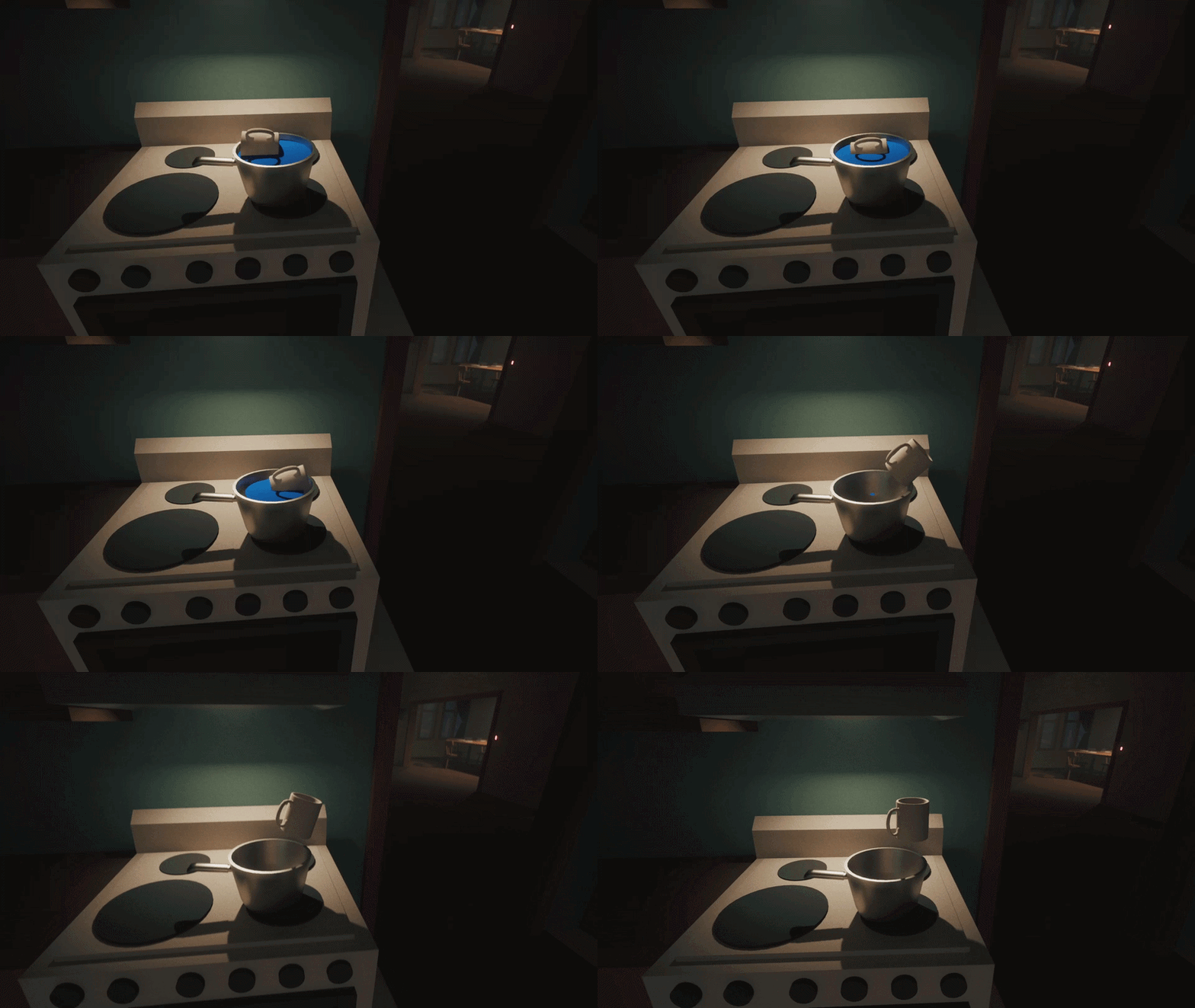
Walking close to the oven, a journal entry will tell you about how your mother couldn’t sleep without her “special milk”, consisting of her favorite mug, warm milk, and a handful of pills. The later two are you able to find around the house from the very start of the level – the mug being the reward for figuring out the Shape Puzzle.
When all of these are brought to the pot, in the right order, a mug of warm milk becomes an object you are able to add to your inventory.This being the key to the master bedroom,where your mother – as far as you know – is asleep in.
How We Interact with the Story
This puzzle is – knowingly made – the simplest one in the entire level. With two previous sequences leading up to it, this puzzle is less about solving a cipher, and more about story context.
By this point, the player will have some understanding of what the story of the house is. An unstable mother, an overprotective father, two children caught in the crossfire just trying to live a normal life. And, at the center, a house with something evil haunting it.
While the last puzzle becomes the final nail in the coffin about the events that transpired here, it was a delight to hear playtesters speculate out loud while playing, trying to put the pieces of the story together. To me, this is what makes a good mystery.
Final Numpad Puzzle
Parent's bedroom
Attic
Exit
Revelations
The master bedroom is dark and in disarray, and when you go to investigate it, the door locks behind you. The numpad on the wall unlocks an attic door, which you unlock after decoding one singular clue.
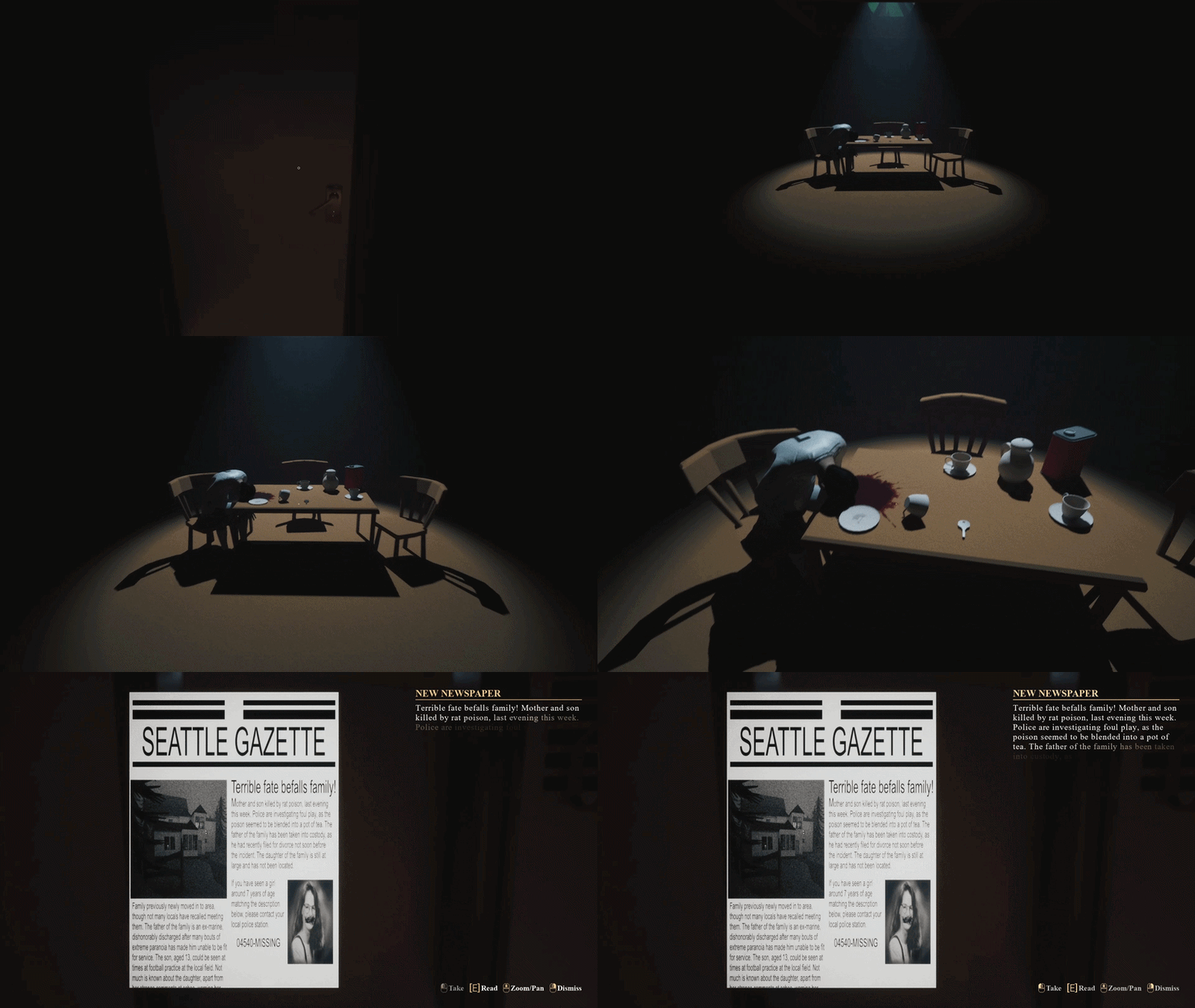
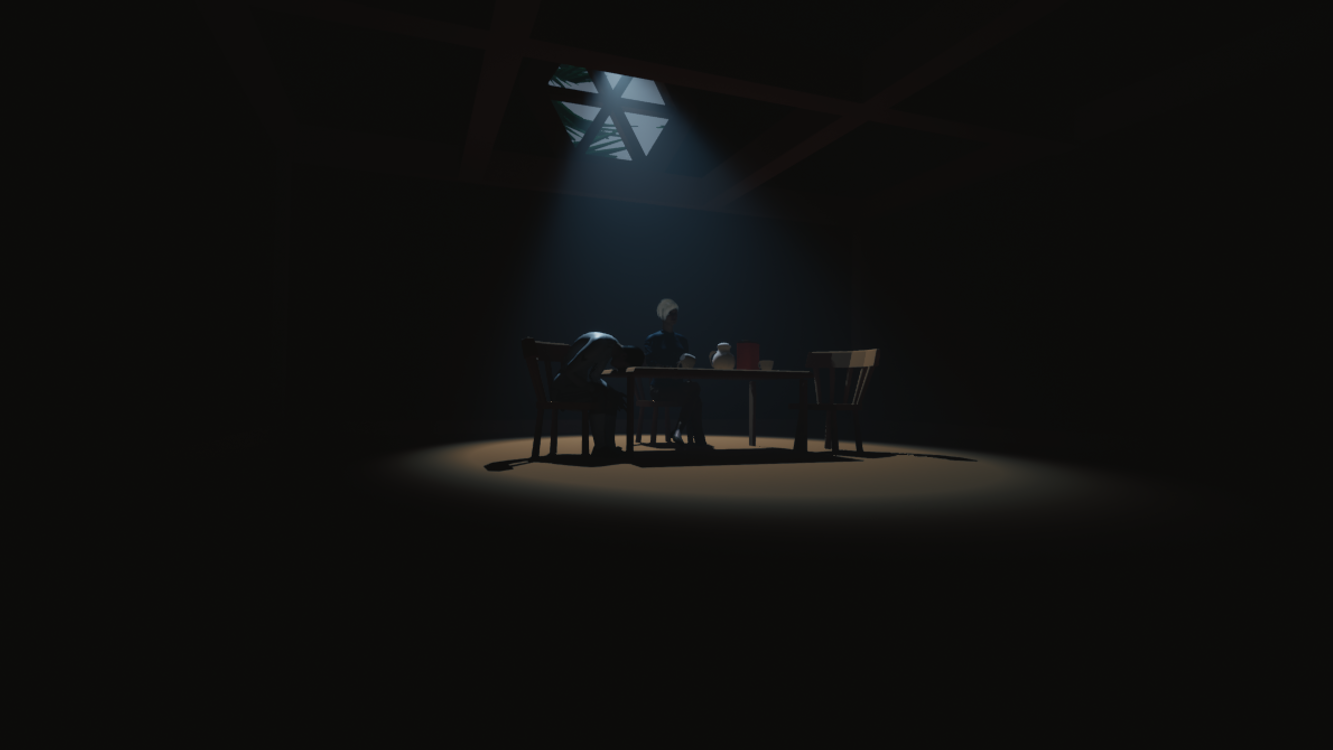
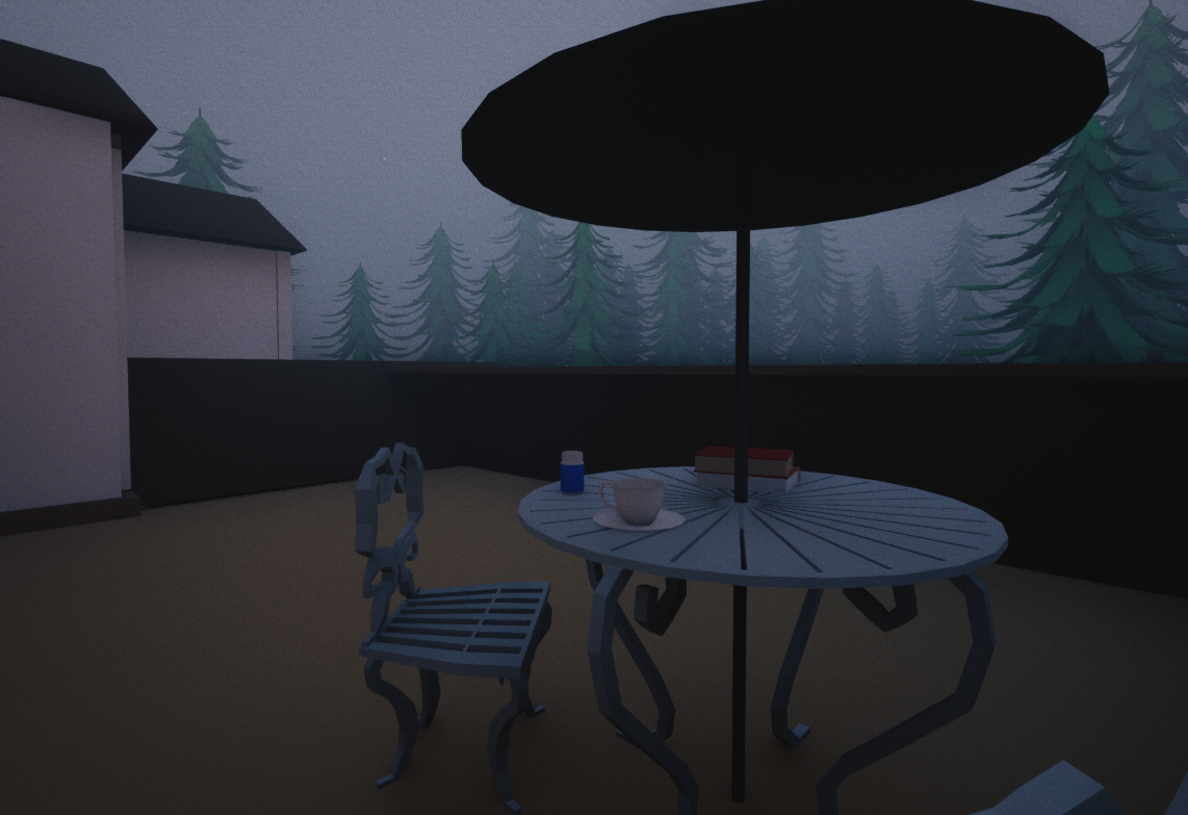
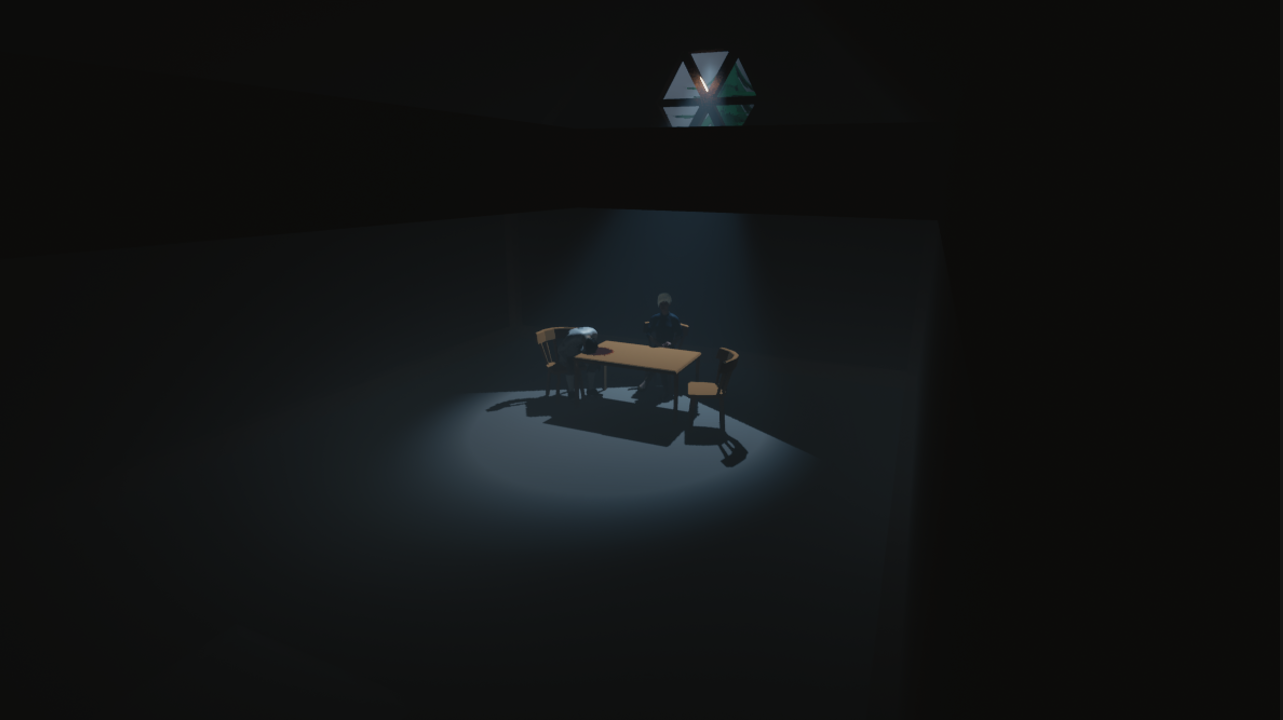
The attic is dark and quiet. Your brother sits at a table, slumped over and blood pooling around his head. An empty tea set and a jar of rat poison sits at the table, as well as the front door key.
The second you pick it up, your mother appears, begging you to go the same way her and your brother did. Stalking you to the front door – though not stopping you – she relents in the end, letting you leave in peace.
Forced paths
Originally, the numpad solution of the master bedroom was meant to unlock the front door. But, after some playtesting, I realized two things;
1. The player could easily guess their way through the front door code via process of elimination, and 2. The ending suddenly felt sudden and lackluster.
So, in the end I moved the last puzzle to lead to the attic, where a generic key is found instead. This forces the player to walk through the house one last time, confonting their mother’s ghost head-on.
Process
Puzzle Mechanics
Pre-production
South Lethe Road is actually the third iterationof the “Symbol equals Number” system. The first version spawned from the Escape Room assignment I worked on in my first year at TGA. The focus there was to create simple, but intuitive puzzle design with fully working scripts and functionalities.
In preparation of the assignment, I worked through playing quite a few of the Rusty Lake mobile games – a large collection of 2D point-and-click puzzle games with abstract but powerful storytelling – and was hooked immediately. They had a similar system across their different games, where the pen-and-paper puzzle-solving is enforced.
The Escape Room
In The Escape Room I only involved a vague story about childhood neglect and the sorrow you bring into adulthood. I wanted to focus more on making the player think and draw conclusions for themselves,in the way I enjoy games with limited hand-holding.
It was made with the pen-and-paper approach, but when I wanted to reuse the system for an assignment in Advanced Scripting, I wanted to push the system a bit further.
Scripted Level
For the Scripted Level Assignment, we were instructed to make more advanced systems. One of these systems for me was to take the physical act of writing down clues into the game itself.
Incorporating this with a journal that updated at different points/locations in the level, fully immersing it in the world of the game.
Story- and Leveldesign
Pre-Production
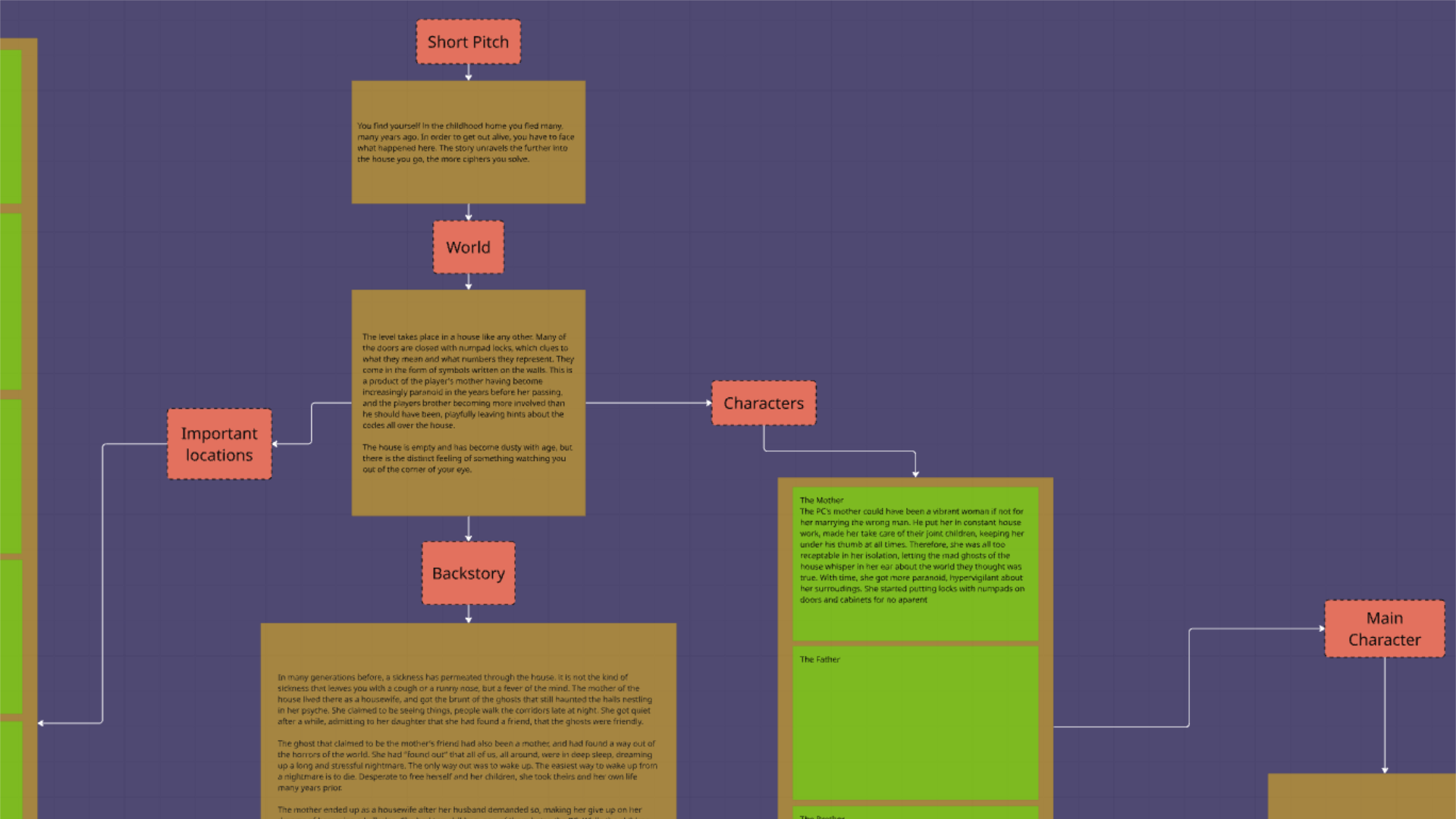
The story in SLR is not an entirely original one. Early in the pre-prod process, I came to the realization that a fully original story would take too much time to write. So, looking around for something to lovingly steal from, I asked myself some questions.
What stories was I the most drawn to in horror narratives? What could be relatively easy to take from the screen to interactive media?How could I tell a worthwhile story in a limited amount of time?
Inspirations
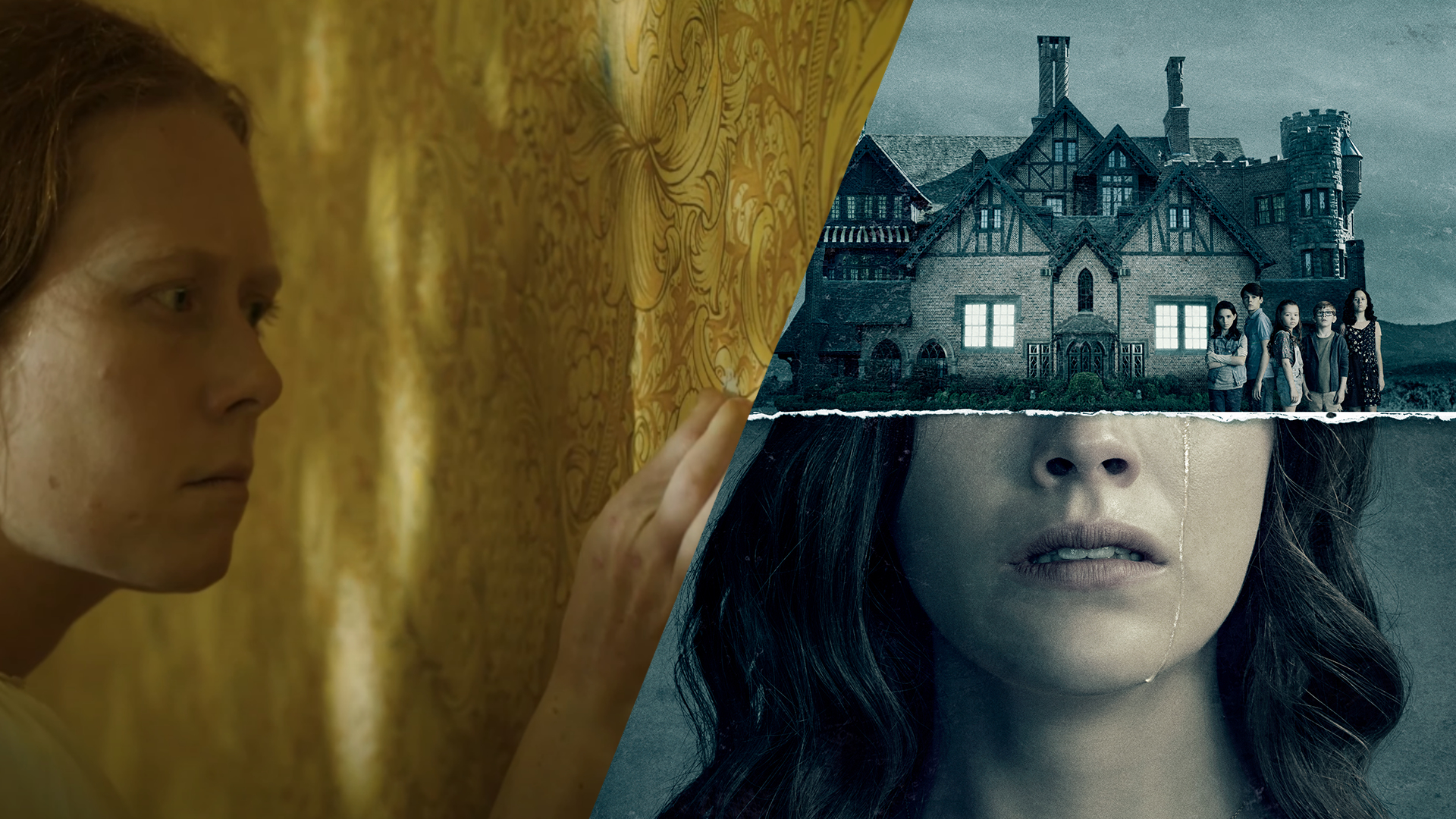
My inspiration of the story came from two fantastic pieces of horror; namely the Netflix series “Haunting of Hill House” by Mike Flanagan, and the short story “The Yellow Wallpaper” by Charlotte Perkins. Both of these works are centered around themes ofisolation, broken familial relationships, and the conviction of something living in the walls.
None of these tropes are unusual for horror stories, but I am convinced that it is not what the tropes are, but how you utilize themthat matters for a good story. Especially when adapting a written/on-screen story into an interactive one.
Architectural immersiveness
In my previous iterations of this level, I was never quite satisfied with the floorplan. It felt too modern, or too game-ified, too reliant on it’s gameplay for it to feel like a “real house”.
To combat this I looked up a lot of floorplans, specifically ones on american suburban villas, made for big families, often built around the 50s-60s. Making observations on what rooms existed andwhere they sat in the house, I very quickly came to a layout that felt much more “alive” than previously.
...and broken immersion
This did, of course, bite me in the ass eventually. In playtesting, I noticed that a lot of players never took the time to walk up to the master bedroom door on the second floor, as it was down a fairly long corridor and around a tight corner.
So, fairly late on, I flipped the entire room 180 degrees, so that you saw the door directly as you came up from the stairs. This was breaking a few of the rulesof floorplans I’d studied, but was something necessary to the gameplay loop.
Cohesive puzzle integration
The merge of the puzzles into the narrative was also something I initially struggled with. Initially, it felt a lot like the puzzles stood apart from the narrative, and not immersed in it. I looked at a lot of examples from games I wanted to emulate the feel of – like Silent Hill, Amnesia or Resident Evil – where a lot of puzzles are there simply to serve as puzzles, not always an event that drives the plot forward.
While I can try to strive for the same high standard these games have, I am just one person. Still, I tried my very best in making every puzzle have some sort of connection to the plot and world as a whole.
Closing Thoughts
What could I have done better?
Through the different iterations of this level, I always wanted to deepen the narrative parts of it.
Now, with the combination of me mainly having experience writing literary texts and is just now trying to break into the world of game writing, I felt that a few of the beats in the story came up short, and didn’t really have the impact I was looking for.
If I had had the time, I would also have spent even more time on the visual details. A lot of small things had to be cut for time, like dirty dishes in the sink, toothbrushes in the bathroom, etc.
What did I learn?
While we have, during our two years at TGA have gotten a thorough tour in different templates and plugins, it was another thing to get acquainted with The Horror Engine all by myself.
There was not a lot of documentation around this template, so a lot of the problems I ran into, I had to solve on my own (of course, with the help of people around me).
It taught me a lot on how to do a bit of detective work in existing code and scripts, what to look for and what to ignore. When it comes to visual scripting, I’ve never had an affinity for recognizing which nodes work in which contexts, but looking over large systems in this way has helped quite a bit.
What did I succeed at?
At it’s core, I am very proud of this piece. I had very clear goals on what I wanted to do, and while I had to bend my own rules a few times, it is at it’s core what I wanted in the beginning.
A few playtesters commented on how they felt like the level really felt like a small, but self contained game from start to finish, which made me extremely happy. My lofty goal from the beginning was for this level to feel less like a whitebox level, and more like a proof of concept.
From the reactions of people playing it, I feel like I have succeeded.